Building a Republican Nation in Vietnam, 1920–1963
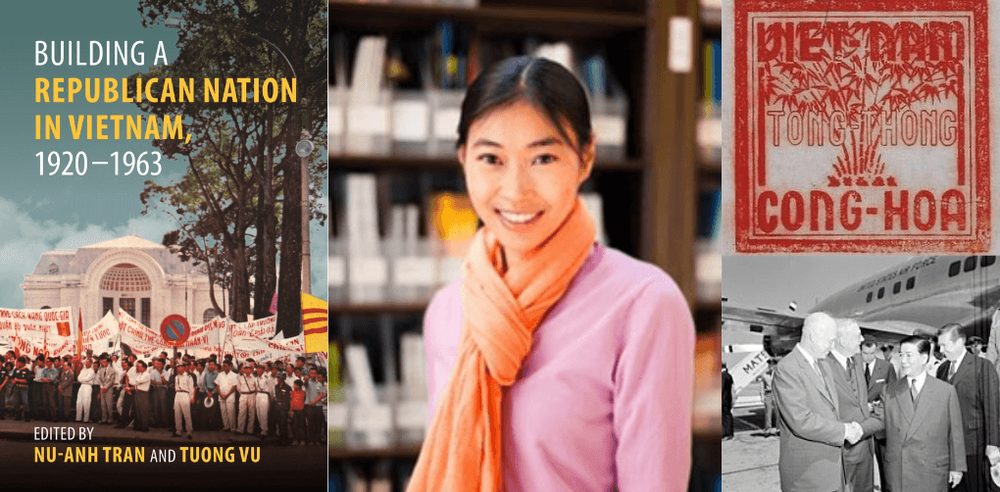
Western observers have long treated communism as synonymous with Vietnam’s modern historical experience. Seeking to explain North Vietnam’s victory in the Vietnam War, scholars and journalists have devoted extensive attention to the history of the Vietnamese communists. This focus, however, has obscured the diversity of ideas and lived experiences that shaped twentieth-century Vietnam, in which communism was only one among many political currents. Building a Republican Nation in Vietnam, 1920–1963, edited by Nu-anh Tran and Tuong Vu, argues that republicanism influenced modern Vietnam no less profoundly than communism. Republicans championed representative government, universal human rights, civil liberties, and the primacy of the nation. These ideas permeated the thinking of Vietnamese reformers, dissidents, and revolutionaries from the early 1900s onward, including many men and women who later led the struggle for independence. Republicanism also served as a major intellectual foundation for the establishment of the Republic of Vietnam (South Vietnam) in 1955.
Belonging to the series Studies of the Weatherhead East Asian Institute, Columbia University, this interdisciplinary volume (University of Hawaii Press, 2023) brings together eleven essays by historians, political scientists, literary scholars, and sociologists who draw on newly available sources to examine the development of republicanism from the colonial era through the First Republic of Vietnam (1955–1963). In their introduction, coeditors Nu-Anh Tran and Tuong Vu critically reassess the existing scholarship on the First Republic, demonstrate how republicanism sheds new light on political developments in the Saigon-based state, and situate the regime in comparative perspective with South Korea. Peter Zinoman’s chapter surveys the historiography of republicanism and modern Vietnam and signals the emergence of a “republican moment” in Vietnam studies. Essays by Nguyễn Lương Hải Khôi, Martina Thucnhi Nguyen, and Yen Vu trace the transformation of republican ideas over time. Nu-Anh Tran and Duy Lap Nguyen analyze competing conceptions of democracy and the factional politics of the First Republic. Contributions by Jason Picard, Cindy Nguyen, Hoàng Phong Tuấn, Nguyễn Thị Minh, and Y Thien Nguyen explore nation- and state-building efforts in the 1950s and 1960s. Taken together, the essays recover the voices of Vietnamese republicans—from the ideas they articulated and the institutions they created to the political legacies they left behind.