Researching and Teaching Vietnamese as a Second Language
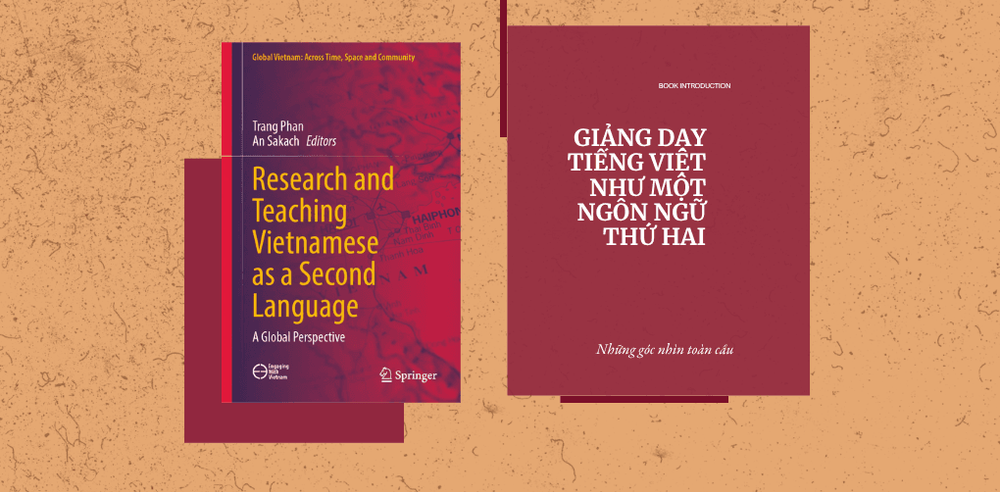
In an increasingly interconnected world, language learning transcends borders, classrooms, and traditional pedagogical approaches. Research and Teaching Vietnamese as a Second Language: A Global Perspective responds to this dynamic landscape, offering a comprehensive examination of Vietnamese as a second language (L2) within diverse sociolinguistic and educational contexts. Edited by Trang Phan and An Sakach, and published by Springer Nature Singapore Pte Ltd. in 2026, this volume situates Vietnamese within the broader framework of Less Commonly Taught Languages (LCTLs), highlighting both the unique challenges and the rich opportunities that arise when teaching and learning in multilingual and multicultural environments.
This book engages scholars, educators, and practitioners in a global dialogue on Vietnamese L2 acquisition, pedagogy, and research innovation. The first section examines Vietnamese learning in global settings, including heritage language use in bilingual families, Vietnamese language acquisition across multilingual contexts, and virtual tandem exchange programs. By bridging empirical research and practical classroom strategies, the volume illuminates pedagogical innovations such as corpus-based vocabulary design, task-based learning, and gamification approaches for heritage learners.
Beyond classroom strategies, the book analyzes cognitive and cross-linguistic influences in L2 Vietnamese. Chapters explore the role of Sino-Japanese knowledge in vocabulary acquisition, motion constructions for Chinese and Korean learners, and wh-word order acquisition by Japanese learners. These studies highlight how learners’ prior linguistic experience shapes Vietnamese L2 development and inform tailored instructional strategies.
Equally important, the book addresses social, cultural, and identity dimensions of language learning. Notably, the volume includes a chapter on translanguaging pedagogy, which examines how teachers and students in U.S. higher education strategically use multiple languages to enhance understanding, cultural connection, and communicative competence. This research emphasizes validating multilingual learners’ identities, fostering inclusive learning spaces, and expanding language acquisition strategies, offering practical guidance for Vietnamese language programs worldwide.
By integrating the voices of educators and learners from diverse regions, the volume provides both theoretical contributions and actionable insights, serving as an essential resource for anyone invested in the global teaching and research of Vietnamese as a second language. Through its global lens, the book celebrates the multiplicity of Vietnamese learning experiences and the creativity, resilience, and agency of learners and teachers worldwide, affirming that the study of Vietnamese as a second language is not only an academic pursuit but also a bridge across cultures, communities, and generations.
More information about the book is available at https://bit.ly/vietnamese-language-classrooms