Song Lang: Nostalgia, Cải Lương, and Affective Forms Beyond Categorization
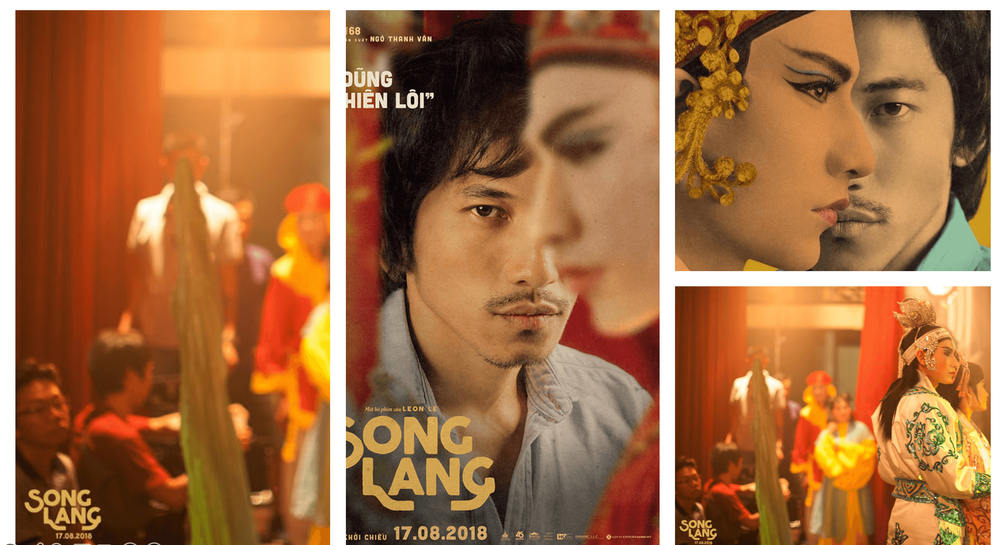
In the context of a rapidly transforming contemporary Vietnamese cinema, Song Lang, directed by Leon Le, emerges as a remarkable work—not only for its poetic visual language, but also for the way it opens up emotional spaces that move beyond familiar frameworks. Produced entirely in Vietnam in the final years of the previous decade, the film transports viewers back to 1980s Saigon, where a relationship gradually unfolds between a debt collector and a cải lương performer—two figures situated at the intersection of art, violence, and everyday life.
At the same time, the film serves as a profound tribute to the art of cải lương, not merely as a performance tradition, but as an affective structure through which tragedy, longing, and attachment are expressed through voice, gesture, and stage space. Within this structure, Song Lang portrays a relationship between two men with rare subtlety, avoiding fixed labels and instead suggesting a broad spectrum of emotional forms—from companionship and empathy to romantic and erotic resonance.
Over the past fifteen years, Vietnamese cinema has undergone rapid development, alongside significant shifts in social attitudes toward sexuality and same-sex relationships. Where LGBTQ representation was once nearly absent, recent years have witnessed an important transition—from avoidance to increasing visibility, and more broadly, toward a reimagining of emotional relationships between people of the same sex. Song Lang stands at the forefront of this shift, not because it simply “represents” an identity, but because it challenges how we understand emotion, desire, and human connection itself.
A conversation with director Leon Le at the Weatherhead East Asian Institute at Columbia University engages directly with these transformations—from the emergence of Vietnamese cinema as a burgeoning industry to the expansion of concepts of sexuality and relationality beyond rigid heterosexual/homosexual binaries. In this discussion, Song Lang is situated within a broader cultural trajectory, where same-sex relationships are understood not only through the lens of “liberation,” but also as part of a longer history of diverse affective bonds within Vietnamese society.
Leon Le, who emigrated from Vietnam to the United States at the age of 13 and later established himself in New York’s musical theater scene, brings to Song Lang a perspective that is both deeply rooted and transnational. His earlier short films, Dawn (2013) and My Mother (2014), earned multiple international awards, including Best Short Film, Best Director, and recognition for outstanding LGBTQ-themed works. With Song Lang, Leon Le not only continues his exploration of same-sex relationships, but also situates them within a distinctly Vietnamese aesthetic and historical landscape.
Song Lang is not simply a film to be watched, but a point of departure for reflection—on cải lương as a living cultural memory, on Saigon as a constructed space of nostalgia, and on the many ways human connection unfolds beyond predetermined categories.
Watch the full conversation with director Leon Le on Song Lang on the Digitizing Việt Nam platform:
https://www.digitizingvietnam.com/en/pedagogy/vietnam-history-culture-politics-lectures/song-lang