Literature & Memory in Vietnam's Revolutionary Eras
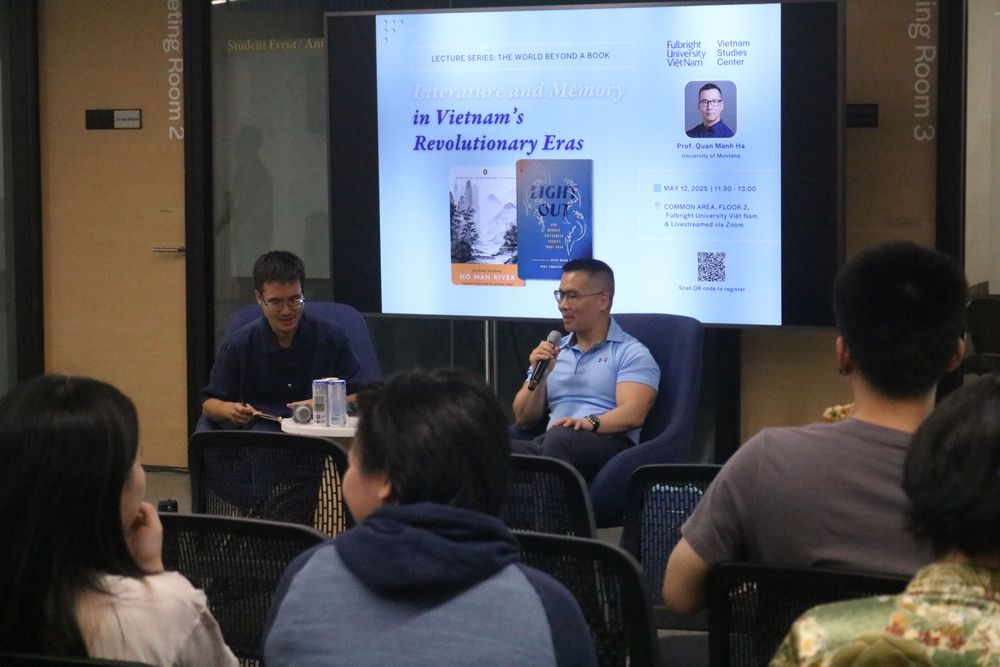
On May 12, the Vietnam Studies Center held the final seminar of the Spring semester in its ongoing series “The World Beyond the Book.” The guest speaker was Dr. Hà Mạnh Quân, a scholar of English Literature at the University of Montana (USA), as well as a translator and editor of several English-language anthologies of Vietnamese literature.
The talk took place as Vietnam looks ahead to two major anniversaries: the 80th anniversary of the August Revolution (1945–2025) and the 50th anniversary of national reunification (1975–2025). With the theme “Literature and Memory in Vietnam’s Revolutionary Periods,” Dr. Hà Mạnh Quân reflected on his experience translating two works: Light Out and Modern Vietnamese Stories, 1930–1954 and the novel No Man River (Bến không chồng) by author Dương Hướng. Both translations contribute to reconstructing significant cultural and political memories of Vietnam through the lens of literature.
Speaking about Light Out and Modern Vietnamese Stories, 1930–1954, Dr. Hà emphasized the diversity of voices and lived experiences captured in the collection. It opens a window into the layered and multifaceted lives of people during this period—where memory belongs not only to the victors, but also to mothers, wives, and marginalized individuals often forgotten in the grand narrative of revolution.
From a translation perspective, Dr. Hà highlighted the challenge of conveying culturally embedded nuances—from intimate family terms to words rich with meaning or unique to Vietnamese culture. A key priority, he noted, is to avoid excessive footnotes that disrupt the emotional rhythm of the text. Instead, his translations were refined in collaboration with native English-speaking creative writers to preserve the story’s natural flow and vitality.
The discussion also touched on the impact of artificial intelligence on translation. “The more we use it, the more we risk becoming dependent and losing the deeply human creativity of the translator,” he shared. Alongside scholarly analysis, Dr. Hà candidly expressed his own philosophy of translation: sometimes one must be bold enough to “take risks,” for only then can a translation preserve the creative spirit and honest vision of the original work.
The seminar concluded with engaging questions from the audience—not only on translation techniques and AI tools, but also on literature’s role in connecting generations, evoking collective memory, and preserving Vietnamese identity amid the currents of globalization.