The New Middle Class in Vietnam: Perspectives on Gender, Career, and Social Change in Contemporary Vietnam
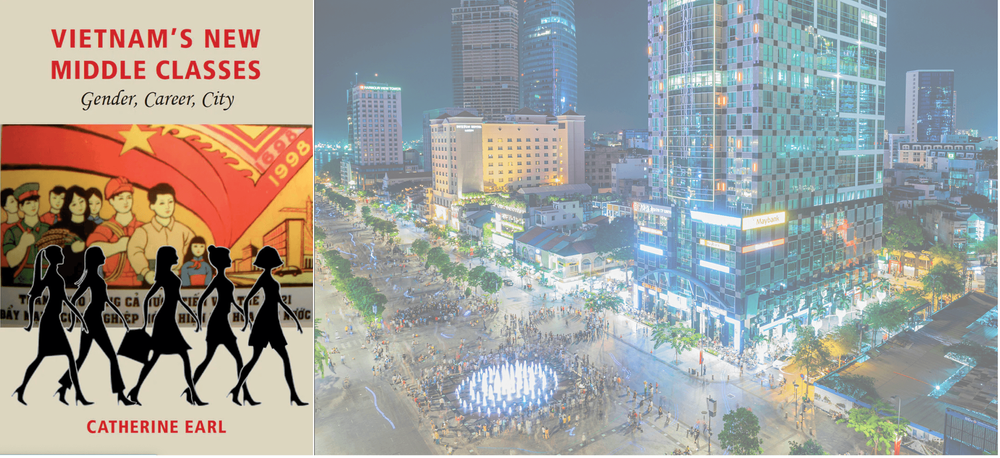
In recent decades, Vietnam has undergone profound economic and social transformation. Since the introduction of the Đổi Mới reforms in the late 1980s, the country has shifted from a centrally planned economy toward a dynamic market-oriented system integrated into global networks of trade, labor, and culture. This rapid transformation has reshaped Vietnamese society, particularly in urban centers such as Ho Chi Minh City and Hanoi, where new opportunities in education, employment, and entrepreneurship have given rise to expanding middle classes. In Vietnam's New Middle Classes: Gender, Career, City (NIAS Press, 2014), anthropologist Catherine Earl examines how these emerging social groups navigate the changing landscape of work, identity, and aspiration in contemporary Vietnam.
Rather than treating the middle class simply as an economic category defined by income or consumption, Earl approaches it as a lived social experience shaped by everyday practices, social expectations, and personal ambitions. Her research focuses particularly on young, highly educated urban professionals—many of them women—whose lives are situated at the intersection of traditional cultural norms and new possibilities opened by economic modernization. Through ethnographic fieldwork, interviews, and close observation of urban professional life, Earl reveals how individuals construct middle-class identities through career development, lifestyle choices, and participation in the rapidly changing urban environment.
A central theme of the book is the role of gender in shaping the opportunities and constraints faced by members of Vietnam’s new middle classes. While economic growth and expanding service sectors have created new career paths for educated women, gender expectations rooted in family responsibility, social reputation, and ideas about femininity continue to influence professional trajectories. Earl demonstrates that middle-class women often negotiate complex tensions between ambition and respectability, independence and familial duty. Their career choices, workplace strategies, and personal relationships illuminate broader transformations in Vietnamese gender norms as the country modernizes.
The city itself plays a crucial role in this story. Urban spaces—offices, cafés, universities, apartment complexes, and shopping centers—serve as sites where new middle-class identities are performed and negotiated. Ho Chi Minh City, in particular, appears in the book not merely as a backdrop but as an active social environment shaping aspirations, consumption patterns, and networks of opportunity. Rapid urban development, global corporate culture, and expanding service industries have produced new forms of social mobility, while also intensifying competition, uncertainty, and pressure to succeed.
By examining the everyday experiences of Vietnam’s young professionals, Vietnam's New Middle Classes provides insight into broader questions about class formation, globalization, and social change in contemporary Southeast Asia. Earl’s work highlights how economic reforms do not simply produce new economic categories but also reshape personal identities, gender relations, and visions of the future. In doing so, the book contributes to ongoing debates about what it means to belong to a middle class in societies undergoing rapid transformation.
Ultimately, this study offers a nuanced portrait of a generation navigating the promises and contradictions of Vietnam’s post-reform economy. Through the intertwined themes of gender, career, and urban life, Catherine Earl shows how Vietnam’s new middle classes are actively constructing new ways of living, working, and imagining their place in a changing world.