
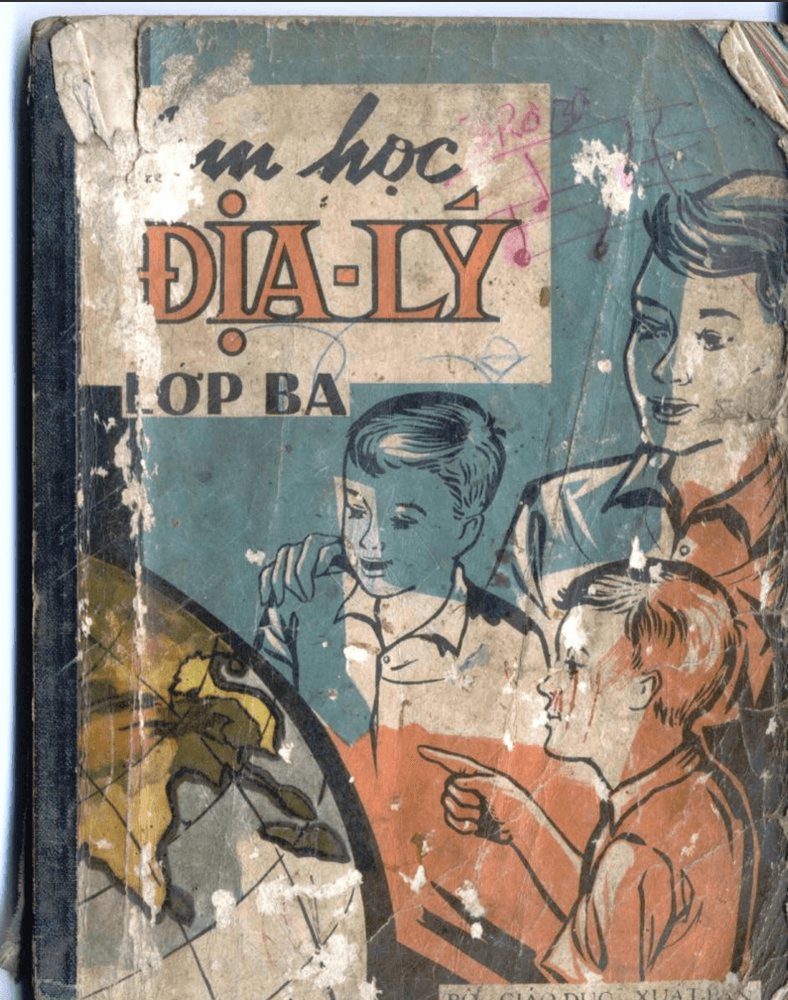
I Learn Geography, Grade Three, 1965, compiled and published by the Ministry of Education of the Republic of Vietnam, was the official textbook for Grade Three elementary students (equivalent to today’s 3rd grade). The book integrates observation, storytelling, hands-on practice, and reasoning to stimulate curiosity and develop critical thinking skills. It consists of 32 lessons divided into five thematic chapters: Astronomy and the Earth; World Geography; Geography of Vietnam; Map Reading Skills; and Natural Features – Population – Agriculture of Vietnam.
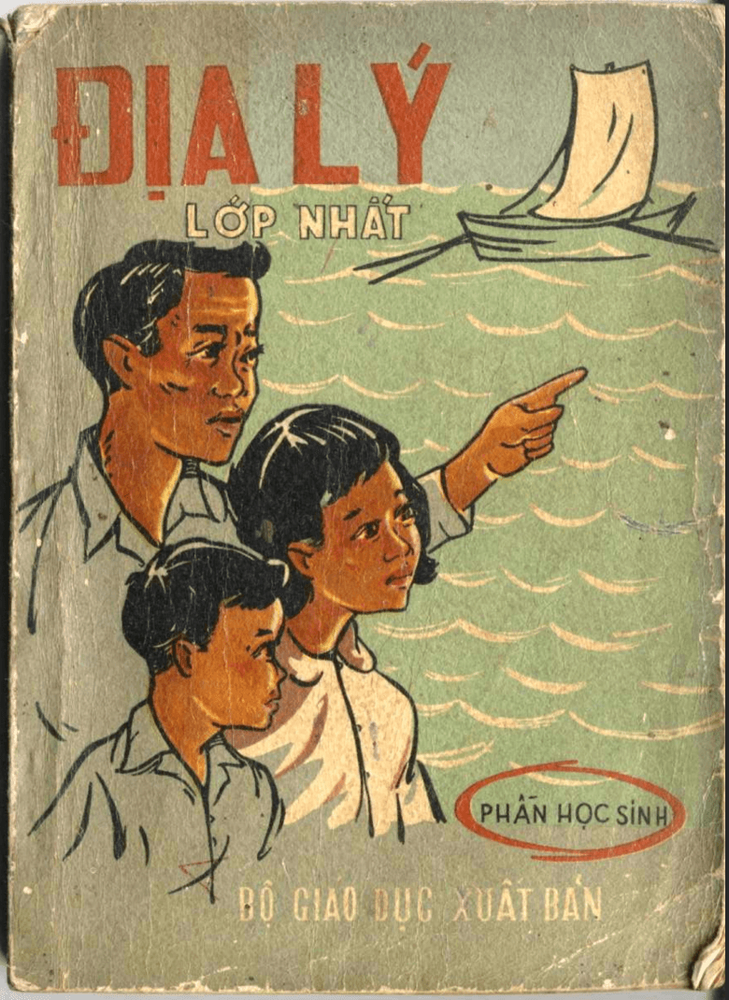
The Địa Lý Lớp Nhất (First Grade Geography) textbook, published by the Republic of Vietnam’s Ministry of Education, introduces primary students to the natural, human, and economic geography of Vietnam and the world. Through fictional characters Loan and Tuấn, children explore topics such as topography, climate, agriculture, international neighbors, and global continents. The textbook is structured into four chapters: Vietnam; Neighboring Countries; The Continents; and Global Powers with relations to Vietnam.
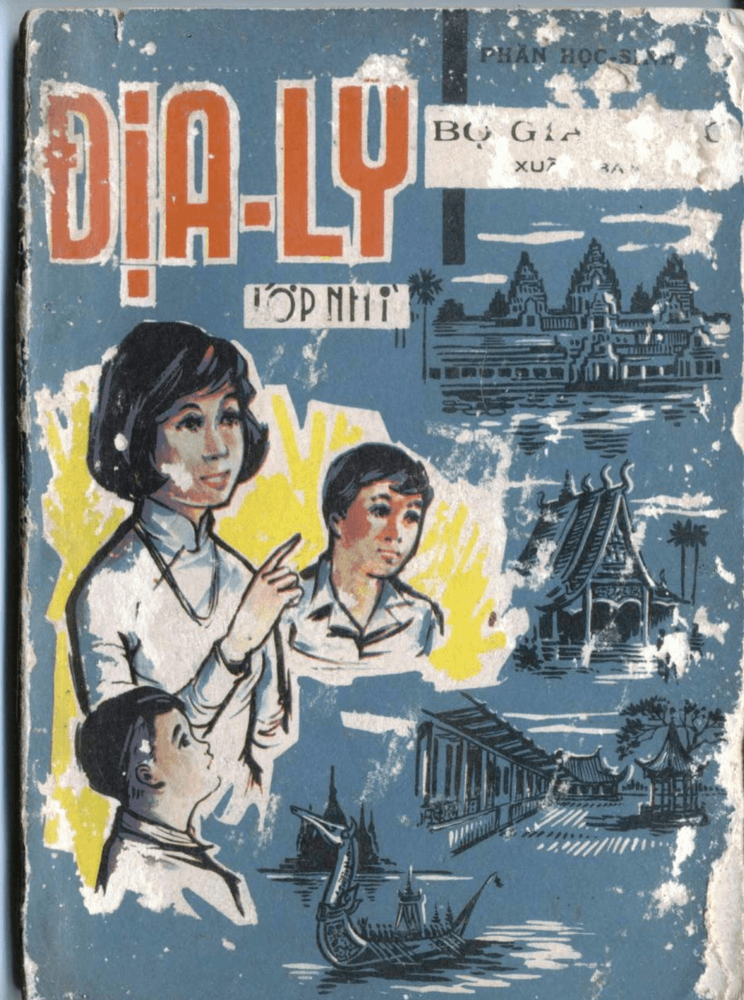
Geography, Grade Two (1966), published by the Republic of Vietnam’s Ministry of Education, is a geography textbook for 4th-grade primary students. The book uses illustrations, personal narratives, and practical activities to introduce Vietnam and its neighboring countries (Cambodia, Laos, China, and Thailand). Lessons are framed as diary entries of a curious student named Tấn, guiding readers through landscapes, people, and economies. The book contains 43 lessons across 9 chapters, emphasizing both observation and critical thinking.
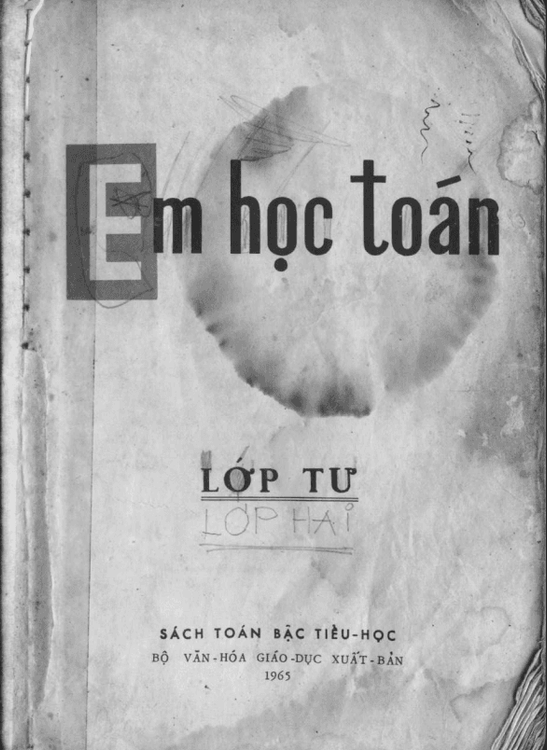
"Em học Toán, lớp Tư" (I Learn Math, Grade Four), published in 1965 by the Ministry of Culture and Education of the Republic of Vietnam, was an official instructional textbook for Grade 4 of primary school—equivalent to today's Grade 2. The book was compiled with advisory support from American specialists. The main objective of the book is to help students approach mathematics through observation, tangible materials, and hands-on activities, rather than rote memorization. Lessons focus on foundational skills such as counting, measuring, reading numbers, and familiarizing students with everyday units of measurement. The curriculum covers: —Arithmetic: Practice with addition, subtraction, multiplication, and division of numbers up to 999, tied to real-life contexts such as shopping and budgeting. —Measurement: Introduction to units of length (meters), volume (liters), weight (kilograms), and common currency denominations. —Geometry: Recognition of points, lines, angles, squares, and rectangles through illustrated examples. —Drawing: Exercises in freehand drawing of basic geometric shapes to reinforce visual understanding.
“Em học Toán, lớp Ba” (I Learn Math, Grade Three, 1965) is an official mathematics textbook for Grade Three of the primary school system—equivalent to today’s 3rd grade—published by the Ministry of Culture and Education of the Republic of Vietnam. The book was developed with a reform-oriented spirit, combining theory with practical application, and emphasizing logical reasoning, computational skills, and real-world applicability. The curriculum is divided into four major sections: Arithmetic, Measurement, Geometry, and Drawing. The Arithmetic section consists of seven chapters that review addition and subtraction with numbers under 1,000, extend to numbers in the millions, and cover multiplication and division with two- or three-digit numbers, word problems, and decimals. The Measurement section helps students become familiar with standard units of length (meter, kilometer), volume (liter), area (square meter), weight (kilogram), and currency (banknotes from 50 to 500 đồng), supported by exercises involving tape measurements, containers, and calculating prices. Geometry focuses on identifying and calculating the perimeter and area of squares, rectangles, parallelograms, and triangles, while also training students to determine height, base, and other key dimensions through guided practice. The final section, Drawing, teaches students how to use rulers and decimeter scales to accurately construct the shapes they’ve studied, reinforcing spatial awareness and basic drawing skills.
Toán Pháp Lớp Năm (Mathematics Method – Grade Five), published in 1970 by the Ministry of Education of the Republic of Vietnam, was an official primary school textbook for Grade Five – equivalent to today’s 5th grade. The book was designed with an emphasis on integrating theory and practice, aiming to train students in fundamental mathematics while enhancing logical thinking and practical application in daily life. The content is organized into four main parts: Arithmetic covers topics from divisibility, fractions, mixed numbers, and the four operations with fractions to real-world applications such as ratios, proportions, percentage calculations, and keeping a family expense ledger; Measurement introduces students to volume, cubic meters, multiples and submultiples, density, and the relationship between volume and weight; Geometry reviews basic solid shapes like cubes, rectangular prisms, cylinders, and cones, along with their volume formulas, encouraging students to measure real-world objects like barrels, water tanks, and wood stacks; Geometric Drawing trains students to draw projections and measured diagrams by hand to scale, building spatial awareness and accuracy in observation.
“Em Tìm Hiểu Khoa Học – Lớp Năm”(1965), published by the Ministry of Education of the Republic of Vietnam, is a primary school science textbook officially designed for Lớp Năm, which is equivalent to first grade today. It introduces young learners to the fundamentals of natural science through observation, questioning, storytelling, and simple experiments. The book follows two characters, Mỹ and Lê, as they explore questions about life, nature, seasons, and the environment.
“Em Tìm Hiểu Khoa Học – Lớp Nhì”, published by the Republic of Vietnam Ministry of Education in the 1960s, was intended for Grade Two, which is the equivalent of Fourth Grade today. Designed to foster scientific curiosity, the book teaches children how to observe, reason, and apply science to everyday life. The textbook emphasizes practical learning through experiments, storytelling, illustrations, and guided discovery. It is divided into two sections: one for students and one for teachers. Covering a wide range of topics like animals, plants, the human body, minerals, seasons, and optics, it offers a rich introduction to natural science for young learners.
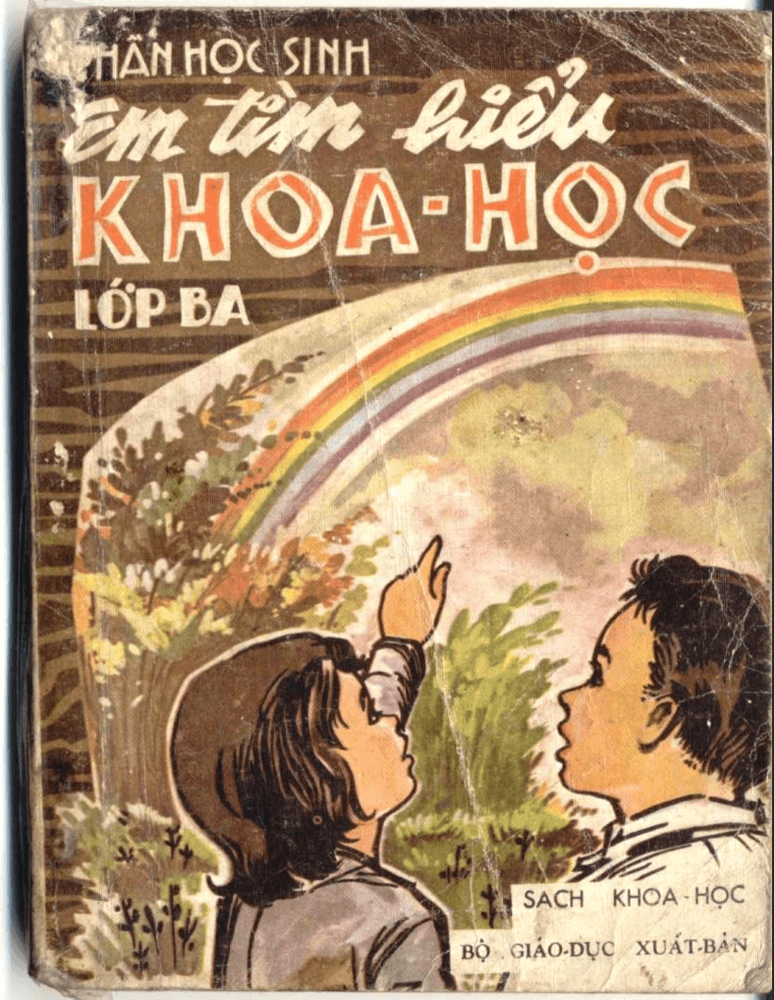
Em Tìm Hiểu Khoa-Học – Lớp Ba, published by the Ministry of Education of the Republic of Vietnam, is an official elementary science book from the 1960s. It was designed to help young students explore the natural world through observation, play, and storytelling. Students learn through characters like Nguyệt, Minh, and Loan, who explore themes from biology to geology.
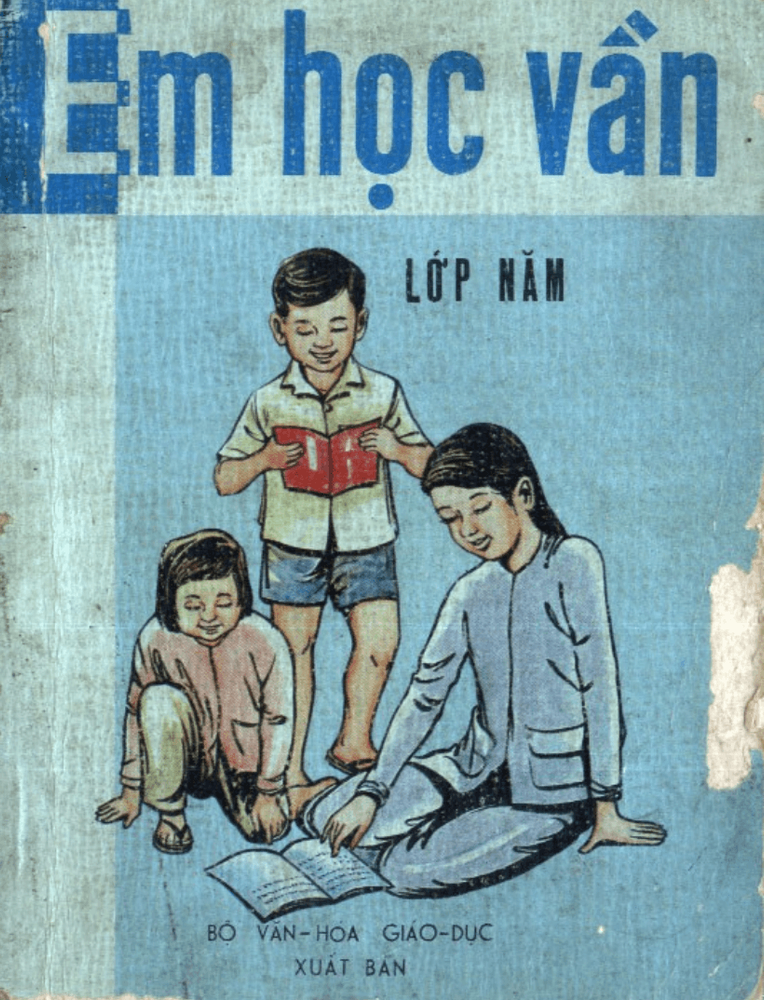
"Em học Vần, lớp Năm" (I Learn Vietnamese, Grade 5) is a primary-level reading textbook, published for the third time in 1969 by the Ministry of Culture and Education of the Republic of Vietnam. In the education system at that time, Lớp Năm (Grade 5) was equivalent to today's Grade 1 – the first year of primary school. The book was compiled by an experienced team of educators, under the guidance of both Vietnamese and international education specialists, notably with support from American advisors affiliated with the Southern Illinois University. The textbook was developed using a hybrid approach, combining the synthetic method (phonics-based spelling) and the analytic method (whole-word reading) – two widely used strategies in teaching Vietnamese literacy during that era. The authors proposed a blended methodology that moves from meaningful sentences to phonetic units, while remaining sensitive to children's cognitive development. Notably, the book features three recurring characters – Chi, Tí, and Tơ – whose daily lives at home, at school, and in society provide familiar contexts for young readers. Each lesson reflects real-life situations, fostering observation, emotional connection, and language expression among early-grade students.
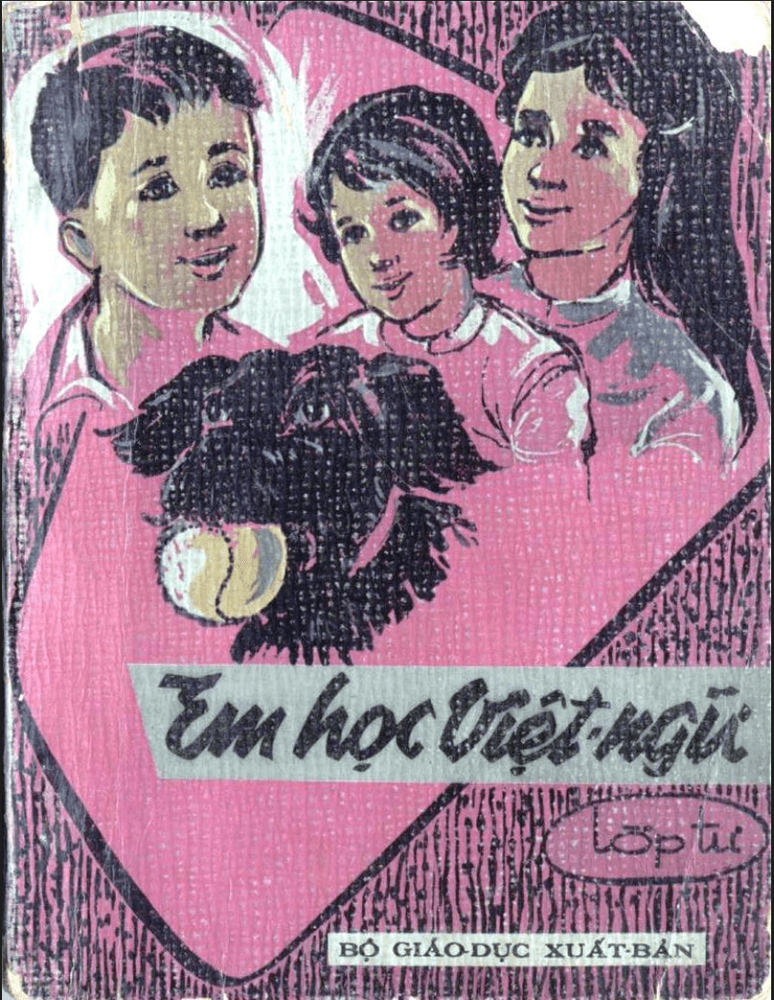
“Em học Việt ngữ – Lớp Tư” ( I Learn Vietnamese, Grade Four), published in 1969 by the Ministry of Culture and Education of the Republic of Vietnam, was the official instructional material for Grade Tư in primary school, equivalent to today’s second grade. Each lesson not only focuses on vocabulary building and reading comprehension, but also connects to real-life experiences familiar to children in Southern Vietnam during that period. With diverse learning formats—such as storytelling, role-playing, gestures, singing, and games—the book helps children retain vocabulary and sentence structures in a natural and engaging way. The textbook comprises 64 lessons, organized into 8 chapters, gradually introducing topics such as Home, Family, Food, Clothing, Body, Animals, School, and Play, following the developmental journey of the main character Nhơn, a 7-year-old second-grade student.
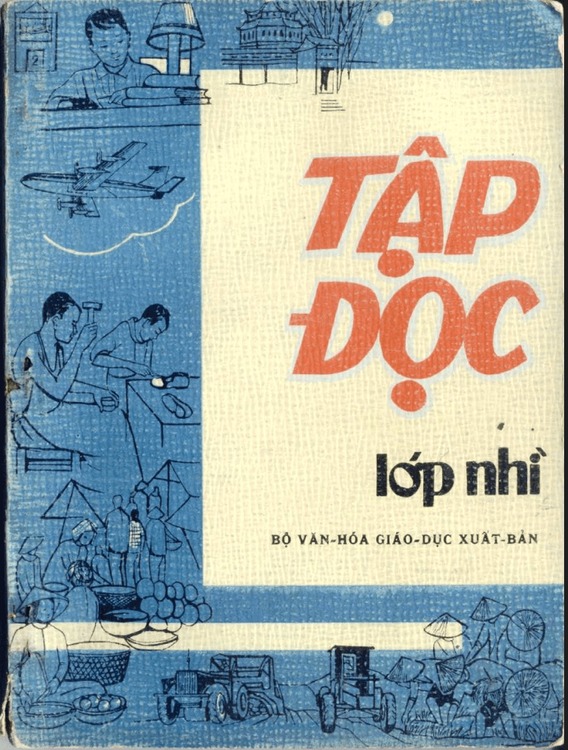
“Tập Đọc Lớp Nhì” (1969), compiled and published by the Republic of Vietnam Ministry of Education, was the official primary school textbook for Lớp Nhì, which corresponds to Grade 4 in today’s education system. The book contains 64 reading passages, including 32 memorization pieces and 12 recreational stories, designed to comprehensively develop students’ reading comprehension, verbal expression, and literary appreciation skills. The content is organized around familiar and educationally rich themes such as: Rural Life, Urban Life, Occupations, Commerce, Transportation, and The Universe.