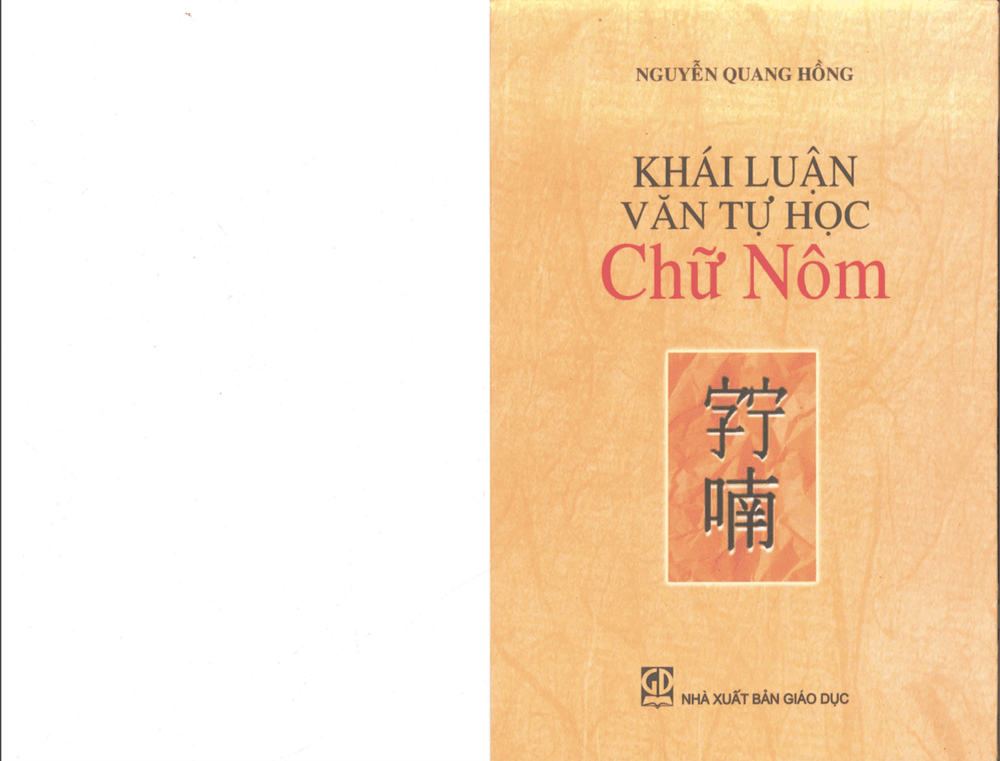
The fundamental and distinctive feature of this monograph is its methodological approach, which bases itself on philology. This is the key point that sets the book apart, as previous works on Nôm script have often prioritized the historical linguistics of Vietnamese over the study of philology when exploring the wealth of Nôm script literature. By returning philology to the forefront of Nôm script research, this book, from a cultural history perspective, addresses a key weakness in previous studies: the tendency to focus too heavily on early-dated literature while neglecting later works, particularly those from the 19th and early 20th centuries. Through this research, Professor Nguyễn Quang Hồng was awarded the National Prize for Science and Technology in 2017. In December 2024, the Chinese translation of this book (喃字文字学概论) was officially published and introduced to Chinese readers by Bashu Publishing House.

The origin of Buddhism in Vietnam is deeply intertwined with a legend that blends both miraculous and realistic elements. This legend tells the story of Lady Man Nuong, who, under the guidance of Monk Khau Da La—a Buddhist monk who came from India during the early centuries of the Common Era—received the teachings of Buddhism. She later became known as the Buddha Mother in the region of Co Chau, located near the ancient Luy Lau citadel. This folk legend has been deeply ingrained in the collective memory of the Vietnamese people in the Red River Delta for generations. It was later elaborated upon by scholars, written into texts, and engraved onto stone tablets by monks for broader dissemination. A group of literary scholars at the Institute of Han-Nom Studies, led by Professor Nguyen Quang Hong, gathered these documents from Dâu Pagoda. After an extensive period of meticulous research, they compiled this book, "Di Văn Chùa Dâu: Cổ Châu lục - Cổ Châu hạnh - Cổ Châu nghi", to share with readers.

"Truyền kỳ mạn lục" is a collection of 20 short stories selected by the renowned scholar Nguyễn Dữ. The stories are written in Han Chinese and combine prose with parallel prose and poetry. At the end of each story, there is a commentary, either by the author or by someone who shares his perspective. Most of the stories are set during the Trần Dynasty, the Hồ Dynasty, and the early Lê Dynasty, spanning from Nghệ An to the northern regions of Vietnam. The works vividly depict the country's landscapes and its people, highlighting their full names and destinies within specific historical contexts. The stories explore a range of themes—sometimes reflecting human nature, at other times showcasing heroism or tragedy. The writing style skillfully blends narrative and lyrical elements, creating a rich and evocative portrayal of both the characters and the era." According to legend, Nguyễn Thế Nghi is said to have translated the Han Chinese work "Truyền kỳ man lục" into Nôm in the 17th century." "Explanatory Notes on the Truyền kỳ mạn lục" (2001 edition) is a transcription by Professor Nguyễn Quang Hồng of the Nôm version of "Truyền kỳ man lục". During the transcription process, Professor Nguyen Quang Hong preserved the linguistic structures and word usage of the Vietnamese language during the medieval period. In addition to the transcription, the professor also annotated the historical references, allusions, and terms used in the text. As a result, this collection of stories holds significant academic value, unlike the current versions of Truyện kỳ mạn lục, which are simply translations from Han Chinese or Nôm into modern Vietnamese.
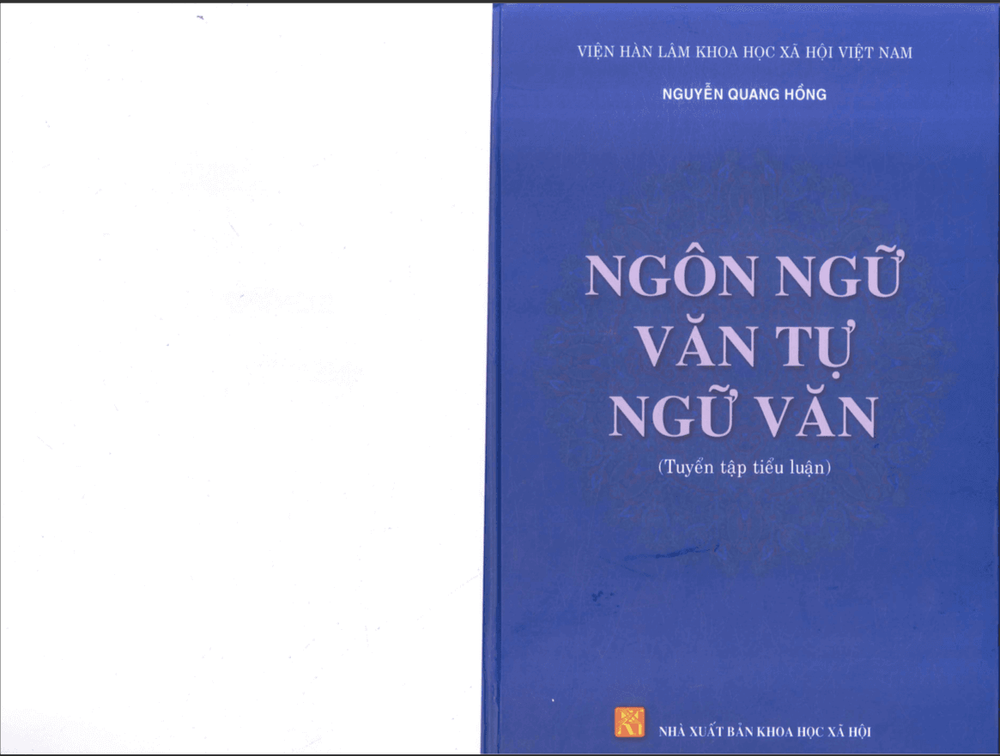
This book is a collection of important articles by Professor Nguyễn Quang Hồng on linguistics, grammatology, and philology over the past 40 years, carefully selected and refined. The monograph is divided into two major sections: (1) Linguistics and Vietnamese Language Studies and (2) Philology and Hán-Nôm Studies The monograph addresses many significant issues in linguistics, such as distinguishing language types, standardizing Vietnamese pronunciation, analyzing syllable structure, and studying the Nôm script, among others. Not only does this work summarize and cover the key research areas of Professor Nguyễn Quang Hồng, but it also serves as a foundation for future interdisciplinary studies, encouraging the exploration of new questions and further development in the field.
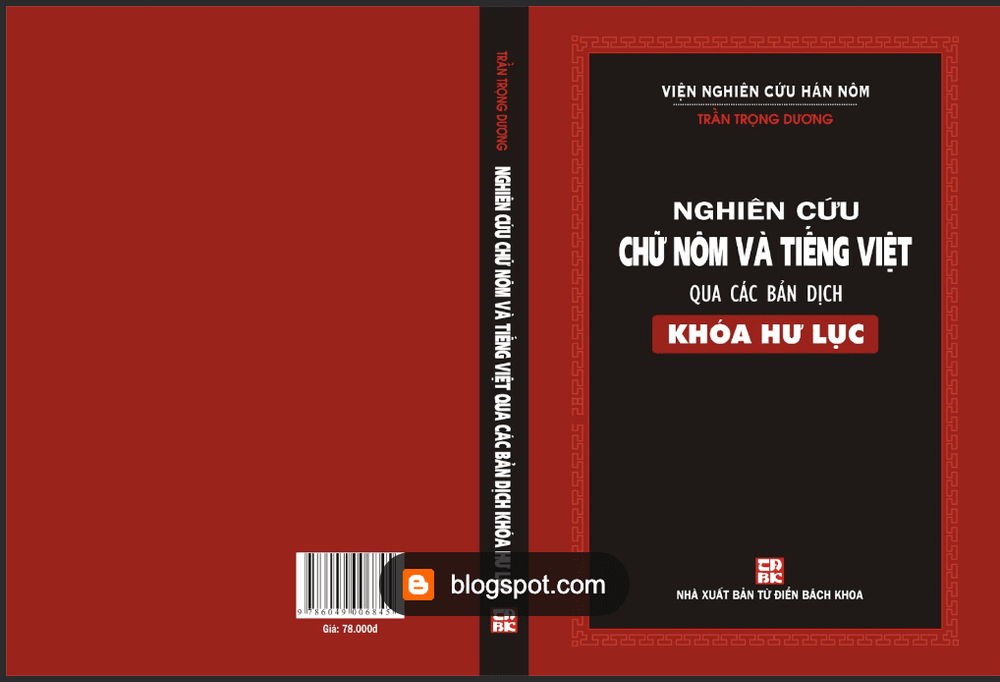
“Research on Chữ Nôm and Vietnamese through the Translations of Khoá hư lục” by Associate Professor Trần Trọng Dương is a scholarly monograph revised and expanded from his doctoral dissertation in Hán Nôm Studies, defended in 2011. The book centers on Khoá hư lục, a seminal work of medieval Vietnamese literature and thought, to shed light on the formation and development of Chữ Nôm as well as the history of the Vietnamese language. The content is structured into three main parts: (1) an examination of the translator and the text through linguistic and scriptural evidence, with particular emphasis on determining the time when Zen master Tuệ Tĩnh completed his explanatory translation of Khoá hư lục; (2) a study of Chữ Nôm in Thiền tông khoá hư ngữ lục and Khoá hư quốc âm, using methods of statistical analysis, comparison, and classification of character structures to highlight their evolution; (3) a study of Vietnamese through these two translations, focusing on archaic vocabulary and function words, with statistical data illustrating lexical differences and clarifying the distinction between “phonetic annotation” (giải âm) and “semantic annotation” (giải nghĩa). With its systematic and meticulous approach, the book makes significant contributions to historical linguistics and Hán Nôm studies, while also providing valuable insights into the localization and development of the Vietnamese language within the broader context of medieval cultural and intellectual history.

“The Origin and Formation of Hán-Việt Pronunciations” is a major scholarly work by Professor Nguyễn Tài Cẩn, one of Vietnam’s leading historical linguists. The book provides an in-depth study of the development of Sino-Vietnamese readings—a unique linguistic phenomenon that reflects the long-standing interaction between Vietnamese and Chinese. The author analyzes the origins, transformations, and phonological rules that shaped these readings, thereby shedding light on the mechanisms through which Chinese vocabulary was adopted and localized in Vietnamese. With rigorous and meticulous scholarship, the book offers a solid theoretical foundation for those interested in Hán Nôm, historical linguistics, and Vietnamese culture. Since its first publication in 1979 and through subsequent reprints, this work has remained an indispensable reference for researchers. Beyond its academic value, it also affirms the linguistic identity and literary heritage of Vietnam throughout history.

"Literacy in Premodern Vietnamese: the Case of Bilingual Dictionary NHẬT DỤNG THƯỜNG ĐÀM by Phạm Đình Hổ" is a specialized work by Associate Professor Trần Trọng Dương, focusing on one of the most notable bilingual dictionaries in the history of Vietnamese language and education. The author not only presents, translates, and annotates Nhật dụng thường đàm but also situates it within the broader context of lexicography and Sino–Vietnamese cultural exchange. Through an analysis of its structure, content, and significance, the book highlights how Vietnamese scholars engaged with Chinese knowledge, language, and culture while creatively localizing them in the Vietnamese context. This study offers valuable materials for understanding the evolution of lexicography, historical linguistics, and the enduring scholarly heritage of Vietnam.

Professor Wang Li’s essay "Han Yue Yu Yanjiu" (“A Study of Sino-Vietnamese”), published in The Lingnan Journal in 1948, is regarded as a landmark contribution in the field of Sino–Vietnamese linguistics. In this work, he divides the Vietnamese lexicon into two major strata: native Vietnamese words and Sino-Vietnamese words. Furthermore, he distinguishes three layers within the phonological system of Sino-Vietnamese vocabulary: Sino-Vietnamese, Old Sino-Vietnamese, and Vieticized Chinese. Wang Li’s pioneering exploration of these historical strata, proposed more than half a century ago, continues to offer valuable insights and remains highly influential today.
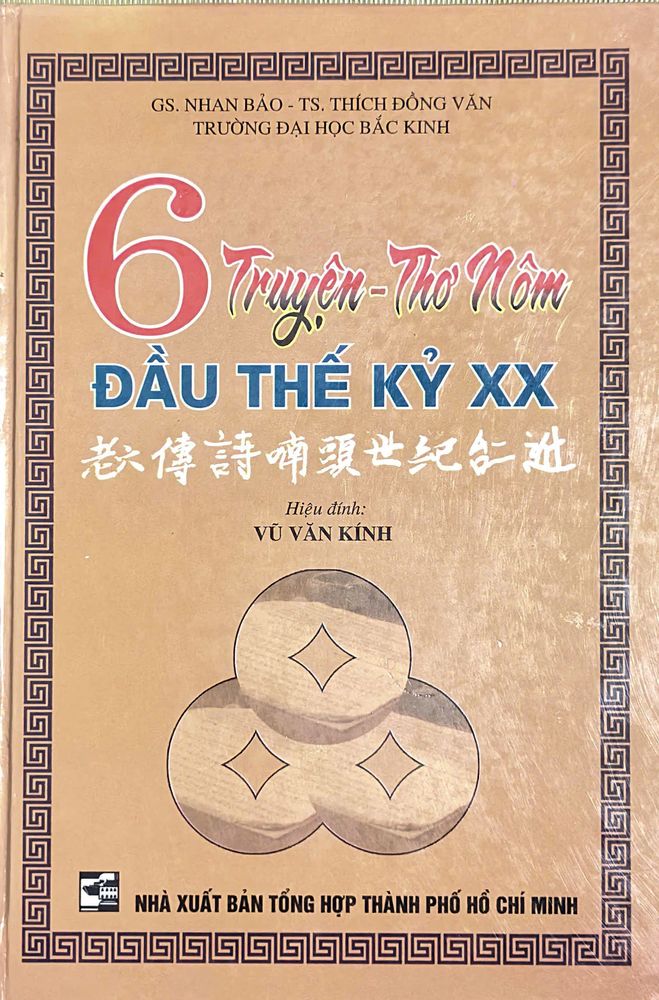
The collection *“Six Nom Verse Tales from the Early 20th Century”* was translated and introduced by Professor Nhan Bao from Peking University, whose deep devotion to Vietnamese culture and profound knowledge of Han–Nom studies guided his work. Though varying in length, these tales vividly reflect the life, love, and spirit of the Vietnamese people through the unique beauty of the Nom script.
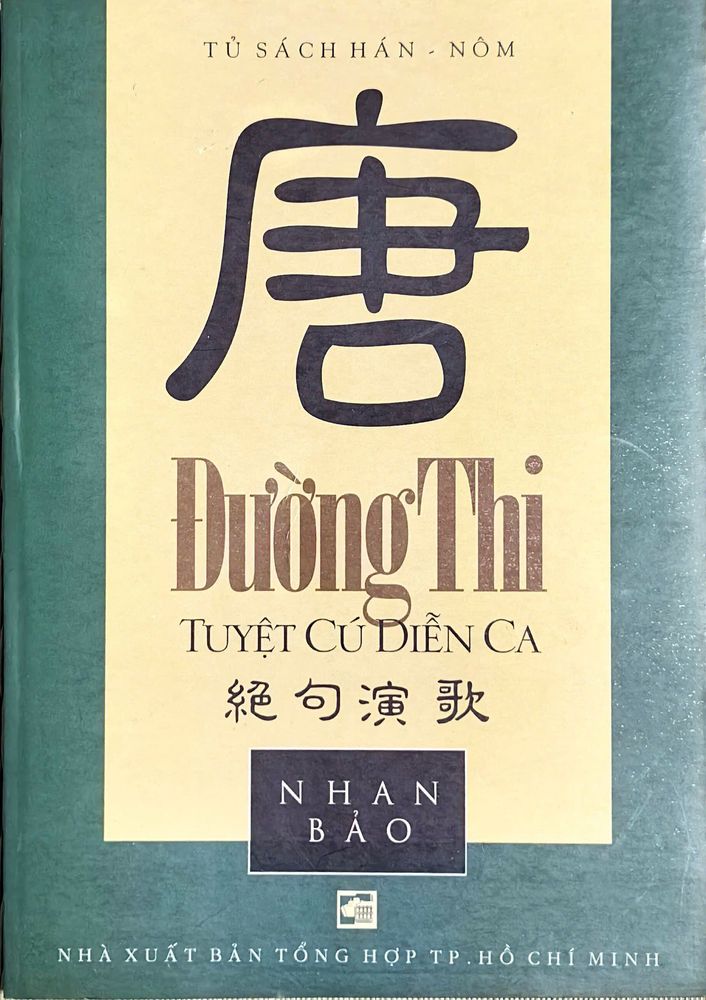
"Tang Poetry in Nom Verse" is a rare and valuable work of collection, transcription, and annotation by Professor Nhan Bao of Peking University. The volume contains nearly sixty Tang poems selected, translated into Vietnamese, and rewritten in Nom script by an anonymous Vietnamese poet several centuries ago. Professor Nhan Bao — a distinguished Han–Nom scholar and leading Vietnamologist in China — discovered this precious manuscript at a library in Paris (France). Through careful romanization and commentary, he has made it possible for today’s readers to access a unique cultural legacy that bridges Vietnamese and Chinese literary traditions.
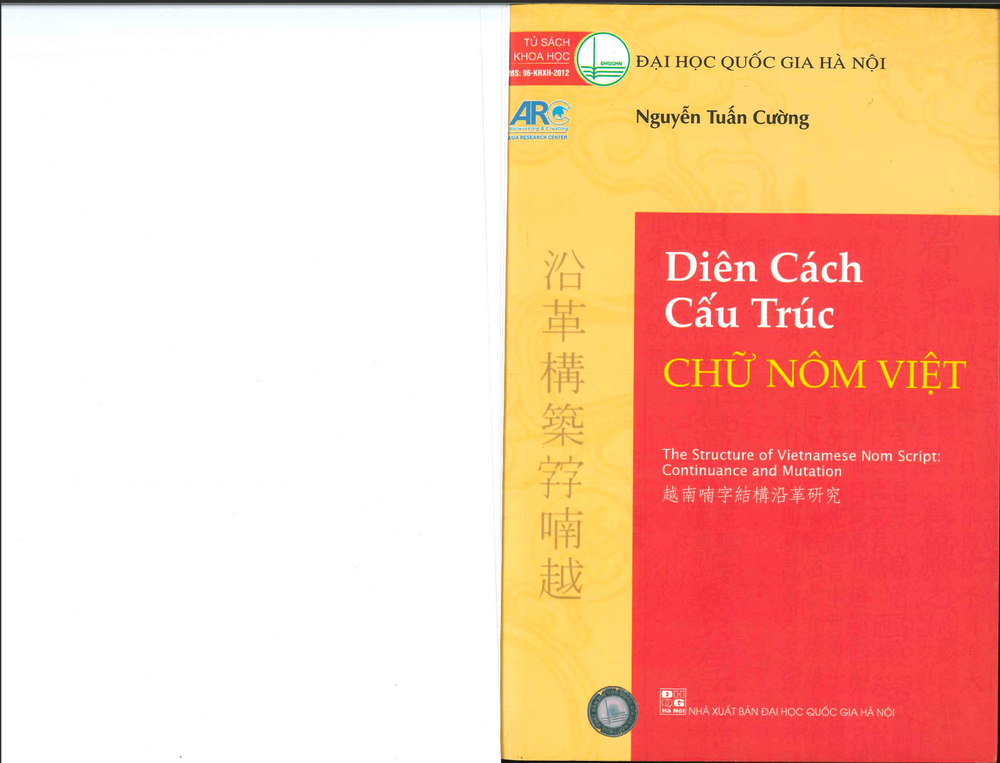
Vietnamese Nôm script, as a unique logographic writing system, calls for investigation from the perspective of graphonomy—the study of the intrinsic nature and structural principles of scripts. From this standpoint, research on Nôm must engage both the systemic level (the broader writing system) and the unit level (the individual character), thereby illuminating the interplay between structural persistence (diên) and transformation (cách). This dual focus constitutes a fundamental methodological need in contemporary Nôm studies. Nguyễn Tuấn Cường’s monograph, Diên cách cấu trúc chữ Nôm Việt (The Structural Persistence and Transformation of Vietnamese Nôm Characters), examines the dynamics of structural continuity and change within Nôm script through annotated versions of the Kinh Thi (Book of Odes). By analyzing the corpus of Nôm glosses in these phonetic-annotation manuscripts, the study traces the evolution of Nôm characters in both their graphic form and functional composition, across the two levels of the writing system and the individual unit. Through its conceptual framework, methodological rigor, and empirical substantiation, this work stands as a significant scholarly contribution—rigorous in theory, grounded in evidence, and precise in presentation. It offers valuable insights for both the theoretical understanding and practical study of Nôm as a living component of Vietnam’s written heritage.
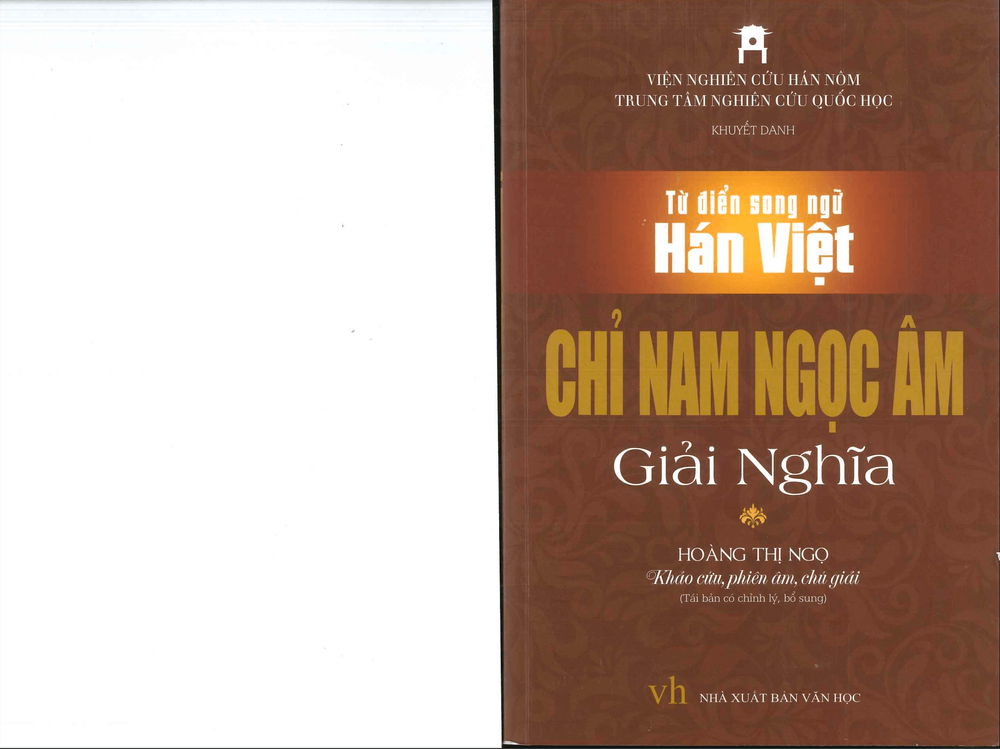
The book "Từ điển song ngữ Hán Việt Chỉ nam ngọc âm giải nghĩa" ("Chỉ nam ngọc âm giải nghĩa: A Sino-Vietnamese Disyllabic Dictionary with Explanations") by Hoàng Thị Ngọ is a synthesis of her research findings and investigations into the original "Chỉ nam ngọc âm giải nghĩa" over the past decade. Hoàng Thị Ngọ carefully re-examined the Hán-Nôm text in an effort to further refine and build upon the annotated version previously established by Dr. Trần Xuân Ngọc Lan. Her work clarifies a range of issues related to the manuscript, authorship, dating, as well as historical phonology and archaic vocabulary. Most notably, she demonstrates that the lục bát (six-eight syllable) verse form was used to express the dictionary’s entries, constituting the earliest known written evidence of the lục bát form in Vietnamese medieval literature. This is the 2020 reprint, revised and expanded compared to the 2016 edition.
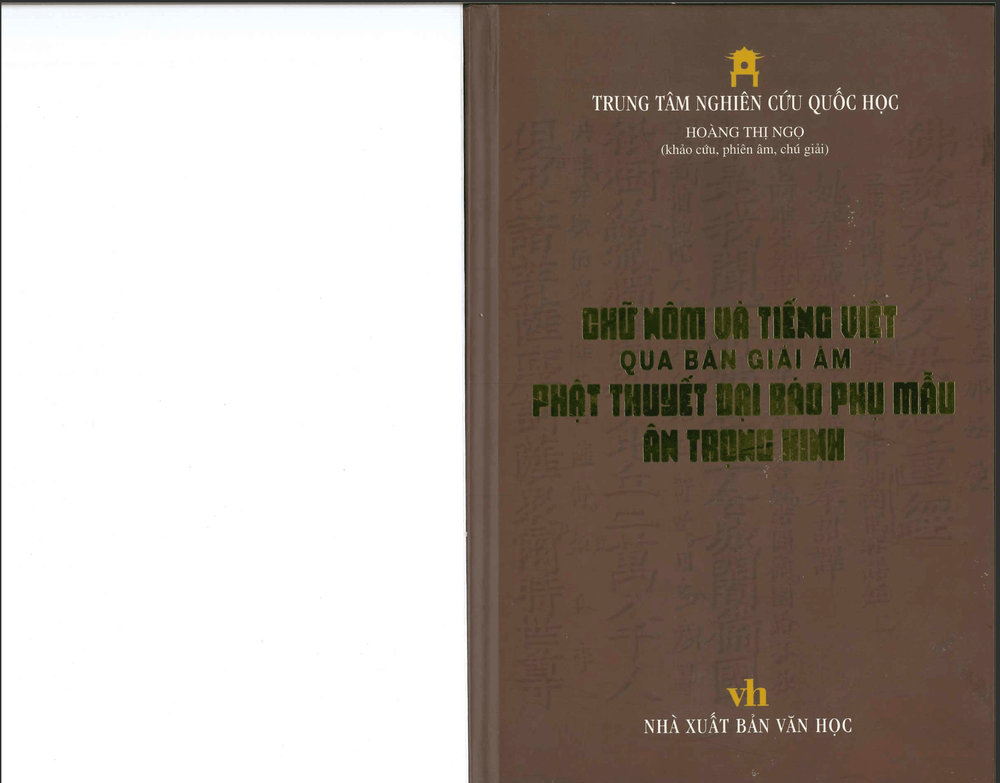
The Annotated Vernacular Edition of the “Sūtra on the Profound Gratitude Owed to Parents” (abbreviated as "Phật thuyết") was long believed to have been lost, sharing the fate of most Vietnamese textual materials from before the sixteenth century. Fortunately, in 1979, the Hán–Nôm scholar Tạ Trọng Hiệp, a Vietnamese researcher based in France, brought a copy of this annotated edition back from Paris to Vietnam. The text itself is a Buddhist scripture centering on the virtue of filial piety (hiếu), making it especially valuable to scholars of religious history, intellectual history, and cultural history—particularly those studying Vietnamese Buddhism during the Lê Sơ period, when Confucianism was at its height. In her study of this annotated edition, Hoàng Thị Ngọ classified the structural types of early Nôm characters, focusing on those compounds that employ two distinct graphs to represent a single Vietnamese syllable. She then analyzed the phonological, lexical, and grammatical features of Vietnamese reflected in the text, offering preliminary observations on the translator’s methods. After transcribing and annotating the entire scripture, Hoàng Thị Ngọ also compiled a lexical index with quantitative data on the frequency of native Nôm words and their contextual usage. The study additionally provides readers with a facsimile of the original annotated text, a rare and invaluable document that facilitates further philological and comparative research in multiple disciplinary directions.
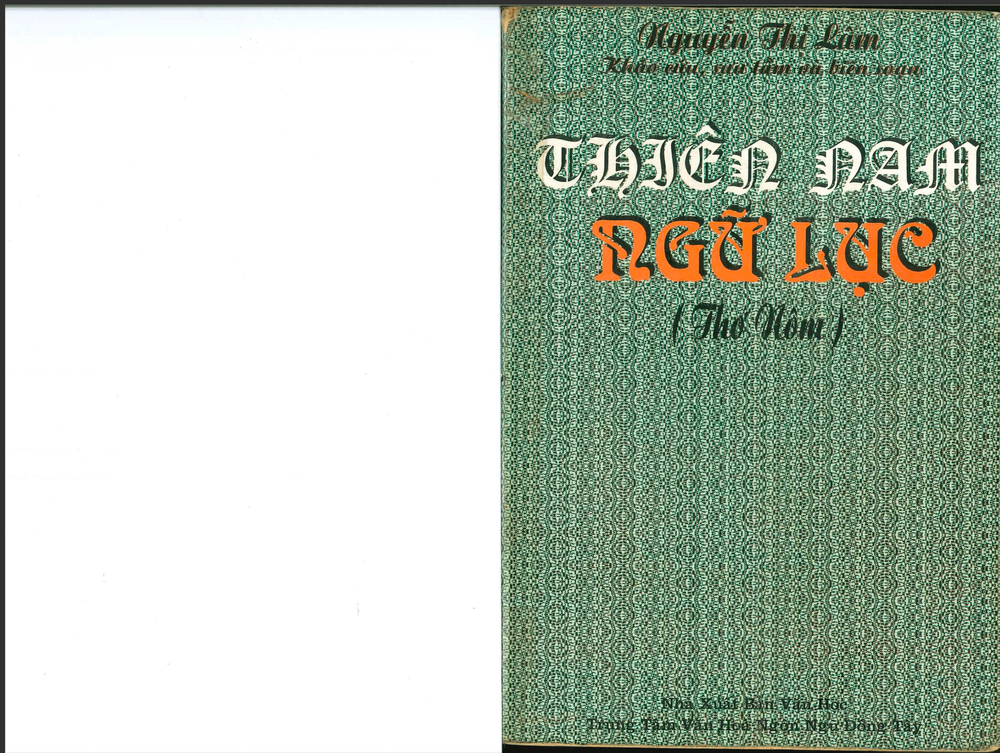
“Thiên Nam ngữ lục” (The Versified Chronicles of the Southern Realm) is a remarkable literary work that emerged around the late seventeenth century, during a period of vigorous development in Vietnamese literature in general and Nôm literature in particular. It is the largest known work written in Nôm, consisting of 8,136 lines of lục bát verse (six–eight syllable couplets), interspersed with 31 poems in Classical Chinese and two additional Nôm poems written in the seven-character regulated verse form. Researcher Nguyễn Thị Lâm carefully re-examined the old romanized transcription, comparing it with extant Nôm manuscripts, correcting inadequate transcriptions, and adding necessary annotations and textual variants to provide readers with a newly edited, annotated, and critically reviewed version of Thiên Nam ngữ lục. In addition to the three Nôm manuscripts previously studied and introduced by Professors Nguyễn Lương Ngọc and Đinh Gia Khánh, Nguyễn Thị Lâm introduced three more versions and conducted comparative analysis on all six. She made over 400 transcription corrections, revised nearly 50 annotations, added about 130 new notes, and compiled new indices of personal and place names appearing in the text.
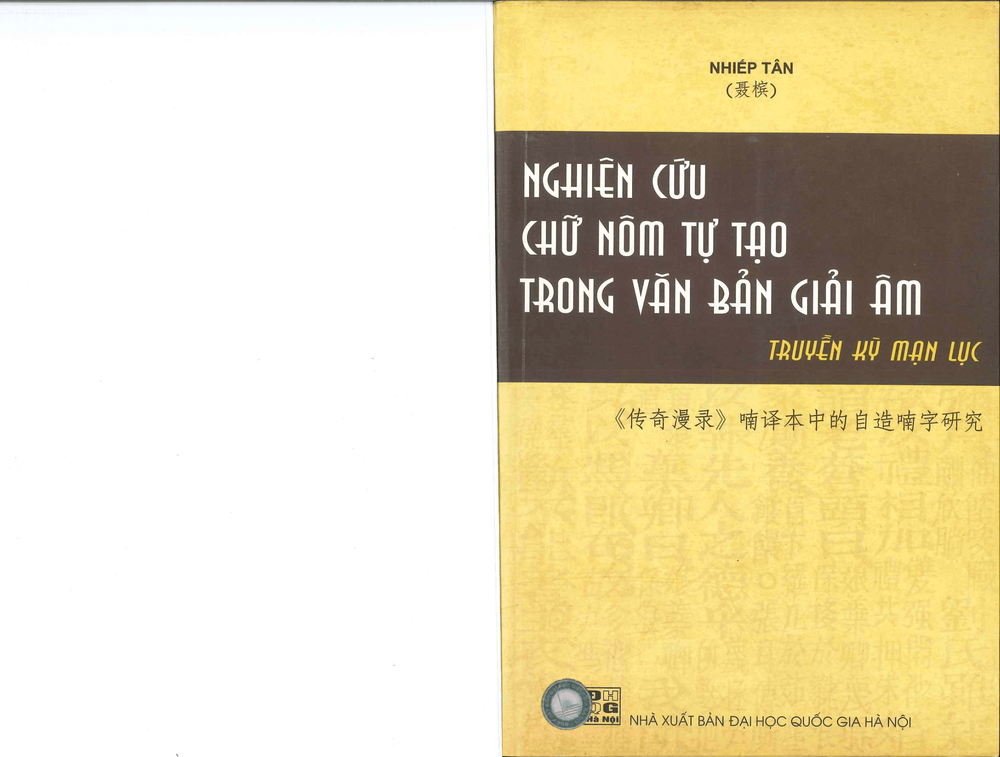
This monograph is a study in the field of grammatology, applying two key theoretical frameworks—functional structure and formal (morphological) structure—to examine invented Nôm characters of Vietnam through a representative Nôm text from the late seventeenth century: the vernacular gloss of Truyền kỳ Mạn lục. The monograph is divided into four chapters: Chapter One introduces the Nôm script and the text Tân biên Truyền kỳ Mạn lục; Chapter Two presents the theoretical foundations of grammatology and an overview of invented Nôm characters in the vernacular gloss of Truyền kỳ Mạn lục; Chapters Three and Four respectively approach the study from the perspectives of functional structure and formal structure, analyzing the invented Nôm characters within this text. In addition, the monograph concludes with nine appendices, which provide supplementary materials to help readers better understand its contents.
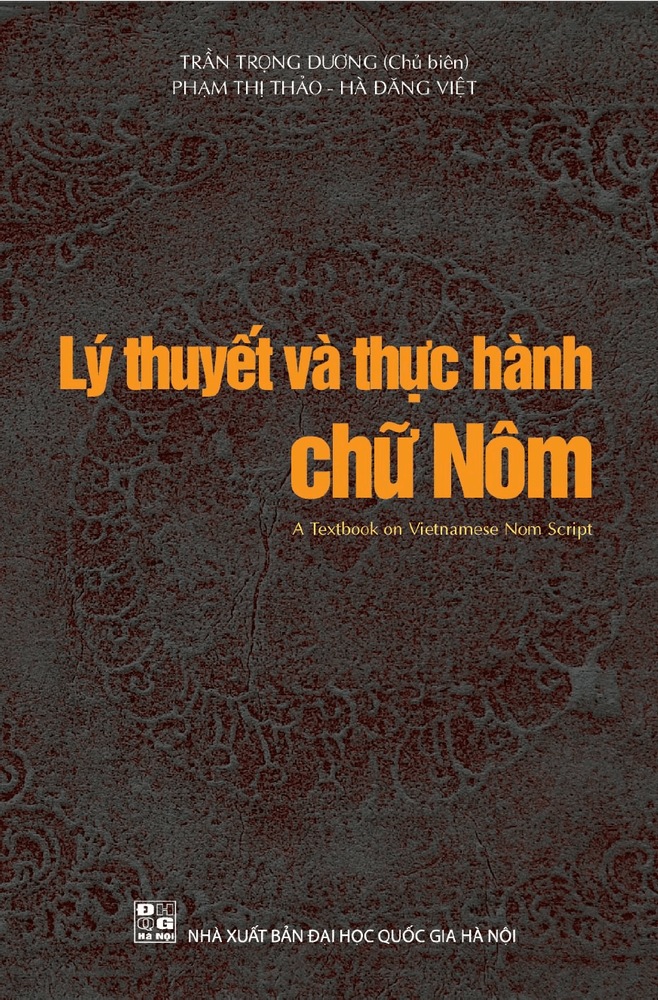
This is a 347-page textbook edited by Trần Trọng Dương (chief editor), with Phạm Thị Thảo and Hà Đăng Việt. It brings together roughly a decade of university-level teaching and research to offer a clear, durable pathway into Nôm studies, balancing scholarly rigor with hands-on guidance. Structurally, the book opens with five concise theory chapters—on what Nôm is, when it emerged, its text types, periodization, and character structure—before moving into an extensive practice section (from Lesson 6 onward) that trains readers to transcribe and analyze originals across genres and media (poetry, folk verse, tuồng, administrative documents, religious translations; on paper, wood, stone, ceramics). Each lesson pairs a Nôm text with romanization, notes, vocabulary, exercises, and facsimiles, aiming to build core skills for decoding Nôm and parsing character formation.

“Thiền Tông Bản Hạnh” is a collection of Nôm verse and prose, comprising four phú (rhapsodies) from the Trần dynasty and one hành poem composed during the Lê dynasty. These works represent some of the finest achievements of Nôm literature within the history of Vietnamese Buddhist writing. The Nôm script preserved in the text contains valuable linguistic data that greatly aids the study of early Vietnamese writing and language. The book was first introduced by Professor Hoàng Xuân Hãn in the journal “Phật học Vạn Hạnh” (Saigon, 1966), based on the 1745 woodblock-printed Nôm edition, and later by Professor Đào Duy Anh in “Chữ Nôm – Origins, Structure, and Development” (Hanoi, 1975), based on the 1932 printed Nôm edition (which at that time was the only version available in the North). Subsequently, numerous Quốc Ngữ transliterations were produced, drawing upon the annotated transliterations prepared by these two scholars. The volume “Thiền Tông Bản Hạnh”, as researched and critically edited by Hoàng Thị Ngọ, is a specialized philological and exegetical study of this important Vietnamese Buddhist text. The work examines the textual origins, variant versions, Nôm language features, and intellectual context of the text, thereby clarifying its historical, religious, and literary significance within the Vietnamese Zen (Thiền) tradition. Beyond textual correction and systematization, the study deepens readers’ understanding of the Zen tradition in the broader trajectory of Vietnamese cultural history, particularly in terms of thought, poetics, and medieval Buddhist discourse.

In medieval Vietnamese poetry, a distinct and vigorously developed genre emerged: historical verse (vịnh sử poetry). Looking back at the achievements of this genre, it can be said that "Vịnh sử thi tập" by Thoát Hiên Đặng Minh Khiêm is the earliest historical poetry collection to have been widely circulated and to have served as a model for many later poets writing in the vịnh sử tradition. "Thoát Hiên Vịnh sử Thi tập", edited and annotated by Hoàng Thị Ngọ and Nguyễn Văn Nguyên, is a scholarly study and transliteration with commentary on this important historical poetry collection within the Vietnamese medieval literary tradition. The work presents the original text, collates variant versions, explains classical allusions, and clarifies the historical and cultural contexts of the poems. Through this research, the book not only restores the philological value of Thoát Hiên Vịnh sử Thi tập but also highlights how earlier authors used poetry to comment on history, express moral perspectives, and articulate a consciousness of the national past. It is a valuable resource for Hán-Nôm studies and for the study of Vietnamese literary history.
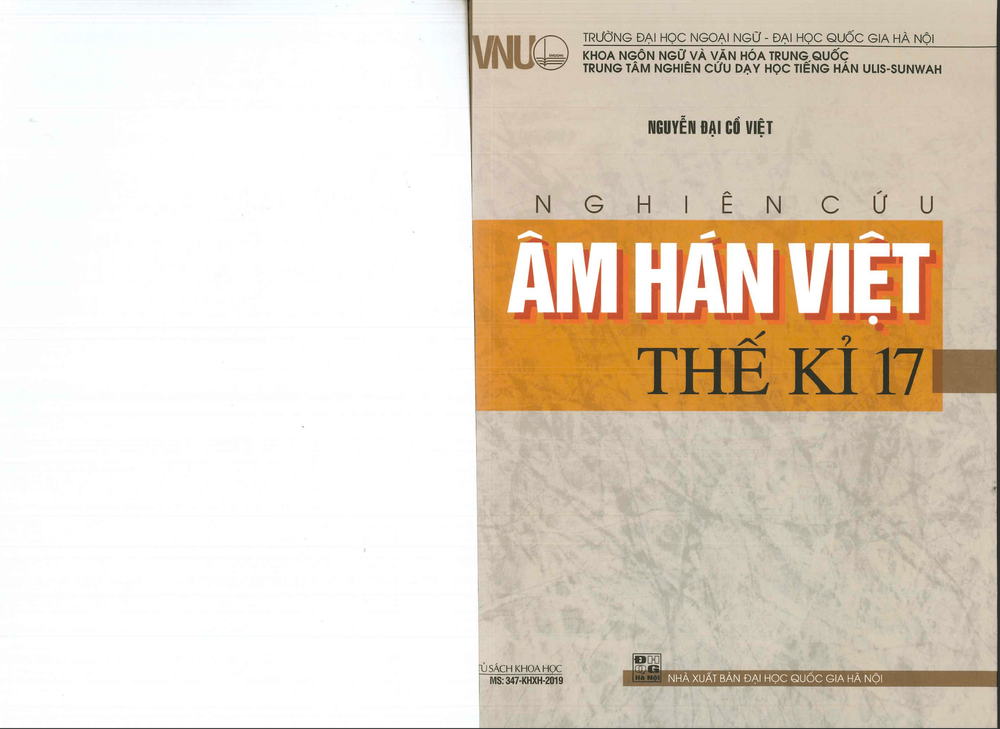
“A Study of 17th-Century Hán-Việt Readings” is a monograph developed from Dr. Nguyễn Đại Cồ Việt’s doctoral dissertation (2011) at Peking University. Although the main text is written in Chinese, the book includes a Vietnamese introduction that systematizes its methodology and specialized terminology. The study introduces the concept of “Vietnamese readings of Chinese characters” as a framework encompassing layers of Sino–Vietnamese contact across history, and is distinguished by its theory of “internal contact,” which explains the interaction between Sino-Vietnamese and native Vietnamese phonological strata. Drawing on early Quốc ngữ sources, especially the "Annamese–Portuguese–Latin Dictionary"(1651) and "History of Annam"(1659) by the Vietnamese priest Bento Thiện, the author reconstructs the phonological system of the 17th century, identifying new patterns of correspondence as well as previously unexplained irregularities. The work emphasizes the agency of Vietnamese in the process of “Vietnamizing” external elements, while clarifying the distinction between standardized Hán-Việt readings and localized Hán-Nôm forms. It represents a significant contribution to historical phonology and to the study of Hán-Nôm materials.

Chèm Village, the former vernacular name of what is now Thụy Phương Ward, is an ancient Vietnamese settlement closely connected to the Red River and the historic Từ Liêm region. Located at the confluence of major waterways, Đình Chèm once served as a point of convergence for trade and cultural exchange in the Thăng Long area. With its classical architecture and distinctive geographic setting, the đình is not only a physical structure but also a space where layers of historical and cultural memory have accumulated over time. The Hán–Nôm Heritage of Đình Chèm, published by Thế Giới Publishers in 2015, is an important work of collection and research on the corpus of Hán–Nôm materials associated with Đình Chèm, one of the oldest historical sites in Hanoi. The project was carried out under the direction of the People’s Committee of Thụy Phương Ward, with Dr. Trần Trọng Dương serving as chief editor. Rather than simply introducing a historical site, the book aims to recover the deeper cultural memory of a community. It situates Đình Chèm within a broader network of history, belief, and textual tradition. In this context, Hán and Nôm scripts are not merely tools of record, but vessels through which collective memory has been preserved across centuries.
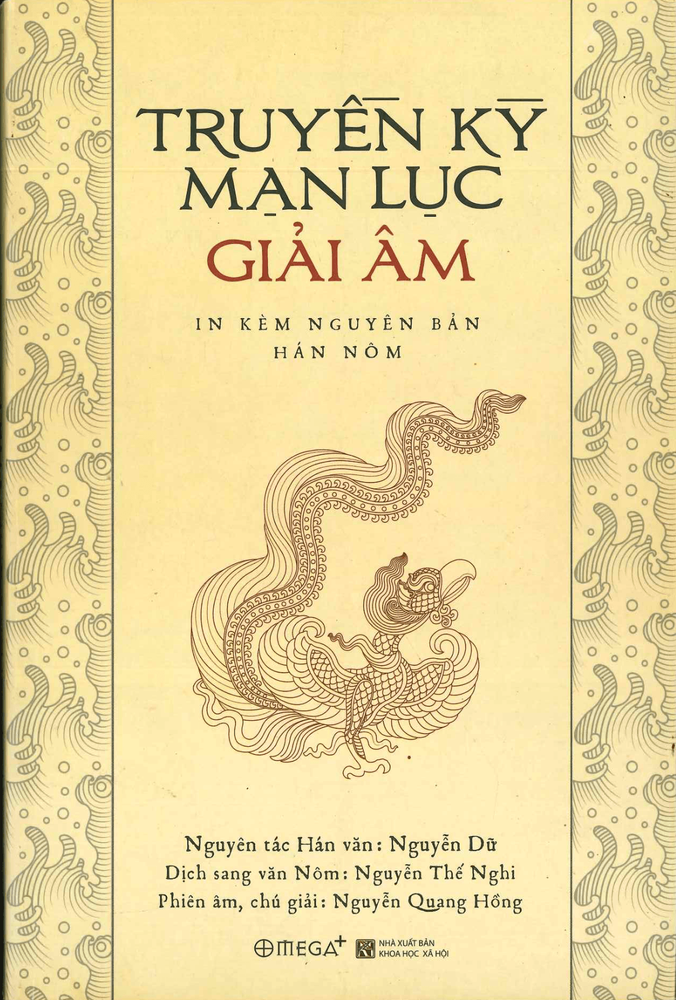
Truyền kỳ mạn lục" is a collection of 20 short stories selected by the renowned scholar Nguyễn Dữ. The stories are written in Han Chinese and combine prose with parallel prose and poetry. At the end of each story, there is a commentary, either by the author or by someone who shares his perspective. Most of the stories are set during the Trần Dynasty, the Hồ Dynasty, and the early Lê Dynasty, spanning from Nghệ An to the northern regions of Vietnam. The works vividly depict the country's landscapes and its people, highlighting their full names and destinies within specific historical contexts. The stories explore a range of themes—sometimes reflecting human nature, at other times showcasing heroism or tragedy. The writing style skillfully blends narrative and lyrical elements, creating a rich and evocative portrayal of both the characters and the era." According to legend, Nguyễn Thế Nghi is said to have translated the Han Chinese work "Truyền kỳ man lục" into Nôm in the 17th century." "Explanatory Notes on the Truyền kỳ mạn lục" (2019) is a transcription by Professor Nguyễn Quang Hồng of the Nôm version of "Truyền kỳ man lục". During the transcription process, Professor Nguyen Quang Hong preserved the linguistic structures and word usage of the Vietnamese language during the medieval period. In addition to the transcription, the professor also annotated the historical references, allusions, and terms used in the text. As a result, this collection of stories holds significant academic value, unlike the current versions of Truyện kỳ mạn lục, which are simply translations from Han Chinese or Nôm into modern Vietnamese. The appendix containing the original text is reproduced with significantly better print quality in the 2019 edition than in the 2001 edition, making it much easier to read.
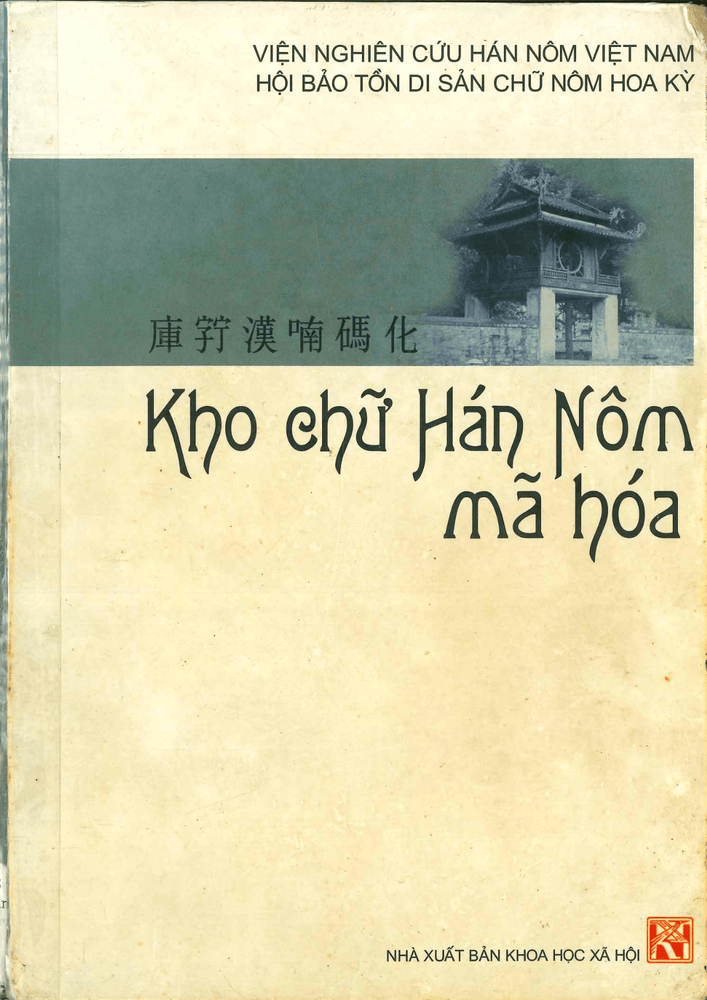
The Coded Hán Nôm Character Repertoire (Kho Chữ Hán Nôm Mã Hóa) is a landmark reference work documenting more than fifteen years of collaboration between Hán Nôm scholars and information technology specialists to standardize, digitize, and incorporate Vietnamese Hán Nôm characters into the international Unicode encoding system. Published in 2008 by the Institute of Hán-Nôm Studies in collaboration with the Vietnamese Nôm Preservation Foundation, the volume was edited by Prof. Nguyễn Quang Hồng and Dr. Ngô Thanh Nhàn. More than a comprehensive catalog of thousands of encoded Hán Nôm characters, this work records Vietnam’s participation in international character standardization efforts, particularly its contributions to the Ideographic Rapporteur Group (IRG) of ISO and Unicode in securing recognition for Nôm characters within the global character repertoire. The volume provides systematic cross-references among Hán Nôm characters, Unicode code points, and Quốc Ngữ readings, while also introducing the principles behind the construction of the coded repertoire, Hán Nôm fonts, knowledge bases, and software tools for processing Hán Nôm texts on computers. Today, The Coded Hán Nôm Character Repertoire remains an essential resource for researchers of Vietnamese classical writing systems and a significant milestone in the history of Vietnamese digital humanities. It stands as a testament to the pioneering efforts to preserve, standardize, and expand access to the rich textual heritage of Hán Nôm in the digital age.

Published in 2012 in No. 7 of the Journal of the Research Institute for World Languages, Osaka University, this Japanese-language article by Sato Thuy Uyen (佐藤トゥイウェン), Shimizu Masaaki (清水政明), and Kondo Mika (近藤美佳) is titled “Quốc Phong Thi Tập Hợp Thái: A Poetry Collection in Chinese Characters, Chữ Nôm, and Quốc Ngữ in Nguyễn-Dynasty Vietnam” (「國風詩集合採」―阮朝ベトナムにおける漢字・字喃・国語字表記の詩集―). The article examines Quốc Phong Thi Tập Hợp Thái (國風詩集合採), an early twentieth-century Vietnamese compilation of popular verse and folk songs. It introduces the work’s textual structure and compilation history and considers it an important source for understanding Vietnamese vernacular language and literary culture during a period of major linguistic transition. The manuscript combines Chinese characters and chữ Nôm with handwritten romanized Vietnamese annotations, providing a valuable record of different writing systems in simultaneous use. Particular attention is given to the collection’s linguistic value. By comparing the Quốc Ngữ transcriptions preserved in the manuscript with modern Vietnamese pronunciation, the authors identify historical features associated with northern Vietnamese speech, including correspondences involving d/r/gi, tr/ch, and s/x. These features provide evidence for studying Vietnamese pronunciation in the early twentieth century. More broadly, the article demonstrates how Quốc Phong Thi Tập Hợp Thái documents a transitional moment in Vietnam’s writing culture, when Hán characters, chữ Nôm, and Quốc Ngữ coexisted. It therefore highlights the collection’s significance for research on Vietnamese folk poetry, historical linguistics, writing systems, and the transformation of textual practices in modern Vietnam.

Published in 2022 in Volume 60 of Tōnan Ajia Kenkyū (東南アジア研究, Southeast Asian Studies), this Japanese-language article by Shimizu Masaaki (清水政明), titled “Dialectal Features of Nôm Characters of Phật Thuyết Thiên Địa Bát Dương Kinh,” examines the dialectal features reflected in the Nôm characters used in the Sino-Nôm version of Phật Thuyết Thiên Địa Bát Dương Kinh, a text preserved at Canh Phuoc Temple in Bangkok, Thailand. Approaching the text from the perspectives of historical phonology and lexicography, the study analyzes the phonetic components of individual Nôm characters to identify dialectal features embedded in their formation and usage. The analysis reveals a number of characteristics associated with Central and Southern Vietnamese dialects, demonstrating that Nôm characters can preserve important evidence of regional linguistic variation and the historical development of the Vietnamese language. The article also situates Phật Thuyết Thiên Địa Bát Dương Kinh within a broader textual and historical context. Through an examination of its contents, dating, publication history, and writing system, the author suggests that the text may have been produced in or after the nineteenth century and considers how its linguistic characteristics relate to the geographical distribution of Vietnamese dialects. Tables and maps included in the study illustrate phonological correspondences among Northern, Central, and Southern Vietnamese and the geographical distribution of several linguistic phenomena reflected in the Nôm characters. More broadly, the study demonstrates how analysis of the structure and phonetic components of Nôm characters can provide important evidence for reconstructing the phonological history and dialectal development of Vietnamese. The author suggests that some features found in the text may reflect changes in Southern Vietnamese dialects from approximately the nineteenth to the early twentieth century, highlighting the value of Sino-Nôm materials for research on Vietnamese historical linguistics, dialectology, historical phonology, and the history of Vietnamese writing systems.

Published in 2010 in No. 2 of the Journal of the Research Institute for World Languages, Osaka University, this Japanese-language article by Shimizu Masaaki (清水政明) is titled “Discovery of the Lost Portion of Hộ Thành Mountain Inscription (1342): Taboo Characters and the Irregular Sino-Vietnamese Readings in the Yu Rhyme Group” (護城山碑文(1342)欠落部の発見―所収避諱文字と虞韻所属例外字音―). The article reports the discovery, during field research in March 2006, of the previously lost first twelve lines of the Hộ Thành Mountain Inscription (1342), which Henri Maspero had described in 1912 as the oldest surviving evidence of Chữ Nôm material in Vietnamese historical phonology. The author reconstructs the contents of the newly identified portion and uses this material to investigate the historical pronunciation of characters recorded in the inscription. Particular attention is given to taboo characters (避諱字) and their relationship to irregular Sino-Vietnamese readings. The study identifies a taboo character occurring after the personal name Mạc and examines its relationship to the character 球, whose Sino-Vietnamese reading cầu is irregular within the Yu (虞) rhyme group. Through comparison with other historical sources, the author argues that this irregular reading resulted from the practice of taboo-name avoidance under the Trần dynasty, which led to the substitution of one vowel for another. The article broadens this analysis by examining other examples of irregular Sino-Vietnamese readings preserved in historical texts. It considers how phonological substitution associated with name taboos could affect the development and transmission of Sino-Vietnamese pronunciations, including alternations involving vowels and diphthongs. Tables in the study compare regular and irregular readings and relate them to historical Chinese rhyme categories and Vietnamese phonological developments. More broadly, the study demonstrates the importance of epigraphic evidence, taboo-name practices, and historical inscriptions for reconstructing the history of Sino-Vietnamese pronunciation. The rediscovery of the lost portion of the Hộ Thành Mountain Inscription provides new textual evidence for understanding the relationship between Chinese characters, Vietnamese historical phonology, and the social conventions that shaped reading practices in medieval Vietnam. The author concludes that Vietnamese taboo-reading practices followed principles that were fundamentally different from those documented in Chinese sources, highlighting the value of Vietnamese epigraphic materials for research on historical linguistics, Sino-Vietnamese readings, chữ Nôm, and the history of Vietnamese writing systems.

Published in 2006 in Volume 6 of Ajia Gengo Ronshū (アジア言語論叢, Asian Languages Review), issued by the Research Institute for Foreign Studies, Kobe City University of Foreign Studies, this English-language article by Masaaki Shimizu, Lê Thị Liên, and Shiro Momoki is titled “The Trace of Dissyllabicity of Vietnamese in the 14th Century: Chữ Nôm Characters Contained in the Inscription of Hộ Thành Mountain (II).” The article introduces and analyzes Inscription No. 5 from Non Nước (Hộ Thành) Mountain in Ninh Bình Province, probably carved in 1383, with particular attention to the phonological information preserved in its Chữ Nôm characters. Building on the authors’ earlier research on another inscription from the same site, the study investigates how Chữ Nôm can be used as evidence for reconstructing the phonological structure of fourteenth-century Vietnamese. The article also provides the inscription’s text, an English translation, and extensive historical annotations concerning the people, places, landholdings, measurements, and administrative terminology recorded in it. A central concern of the study is the possible survival of dissyllabic structures in medieval Vietnamese. Modern Vietnamese is predominantly monosyllabic at the morpheme level, but the authors investigate whether fourteenth-century Vietnamese still preserved presyllables—minor syllabic elements preceding a main syllable. By examining Chữ Nôm spellings in which two characters appear to represent what later became a single Vietnamese syllable, the authors identify evidence suggesting that such older disyllabic structures had not yet completely disappeared. The study combines evidence from the Hộ Thành inscription with Chữ Nôm material from the Sino-Vietnamese text of Phật Thuyết Đại Báo Phụ Mẫu Ân Trọng Kinh. Through comparisons among Chữ Nôm spellings, modern Vietnamese forms, Sino-Vietnamese readings, and related Việt-Mường languages, the authors reconstruct a set of historical presyllables. They also examine tonal correspondences and consonant development to explain how earlier disyllabic forms could have evolved into the monosyllabic structures characteristic of modern Vietnamese. More broadly, the article argues that Vietnamese in the fourteenth century still retained traces of a disyllabic structure comparable to features preserved in conservative Việt-Mường languages such as Rục. The analysis demonstrates the importance of medieval Chữ Nôm inscriptions as linguistic evidence: the ways in which characters were selected and combined can preserve phonological information that is no longer visible in modern Vietnamese. The study therefore highlights the value of Chữ Nôm and epigraphic materials for research on Vietnamese historical phonology, the development from disyllabic to monosyllabic structures, Việt-Mường comparative linguistics, and the historical development of the Vietnamese language.

Published in 1999 in No. 28 of Tōnan Ajia: Rekishi to Bunka (東南アジア―歴史と文化―, Southeast Asia: History and Culture), this Japanese-language article by Shimizu Masaaki (清水政明) is titled “Sino-Vietnamese Readings Included in the Dictionary of Alexandre de Rhodes” (Alexandre de Rhodes の辞書に見るベトナム漢字音について). The study uses Alexandre de Rhodes’s Dictionarium Annamiticum Lusitanum et Latinum—commonly known as the Vietnamese–Portuguese–Latin Dictionary, published in Rome in 1651—as its principal source for investigating the history of Sino-Vietnamese pronunciation. From the perspective of historical phonology, the article analyzes more than 970 Chinese characters transcribed in Romanized Vietnamese with diacritics in de Rhodes’s dictionary. By comparing these seventeenth-century transcriptions with modern Sino-Vietnamese readings, the author examines changes in the system of initial consonants, consonant clusters, vowels, final consonants, and tones, thereby illuminating features of Middle Vietnamese and the historical development of the modern Sino-Vietnamese reading system. An important part of the study concerns changes in consonants and consonant clusters between the seventeenth and twentieth centuries. The author analyzes cases in which the readings recorded by de Rhodes differ from modern Sino-Vietnamese pronunciations and argues that some of these differences reflect systematic processes of phonological change. The study also indicates that certain older forms did not disappear completely but remain preserved in some present-day Vietnamese dialects, demonstrating the value of seventeenth-century materials for investigating both the history and dialectal diversity of Vietnamese. The article also investigates the Vietnamese tonal system documented in de Rhodes’s dictionary. Although the seventeenth-century system contained six tones, as does modern Vietnamese, the author observes that some syllables written with the hỏi tone in modern orthography were recorded with the ngã tone in the seventeenth-century dictionary, and vice versa. This phenomenon is considered in relation to register distinctions and the historical development of Vietnamese tones. More broadly, the study demonstrates that Alexandre de Rhodes’s Vietnamese–Portuguese–Latin Dictionary is not only an important source for the history of Quốc Ngữ, but also a particularly valuable linguistic resource for reconstructing seventeenth-century Vietnamese and the historical development of Sino-Vietnamese readings. Comparing the dictionary’s transcriptions with modern Sino-Vietnamese pronunciation reveals phonological changes that unfolded over several centuries, while also providing evidence for the influence of dialectal variation and naming taboos on certain readings. The article is therefore valuable for research on Vietnamese historical phonology, Sino-Vietnamese readings, dialectology, the history of Quốc Ngữ, and the historical development of the Vietnamese language.