
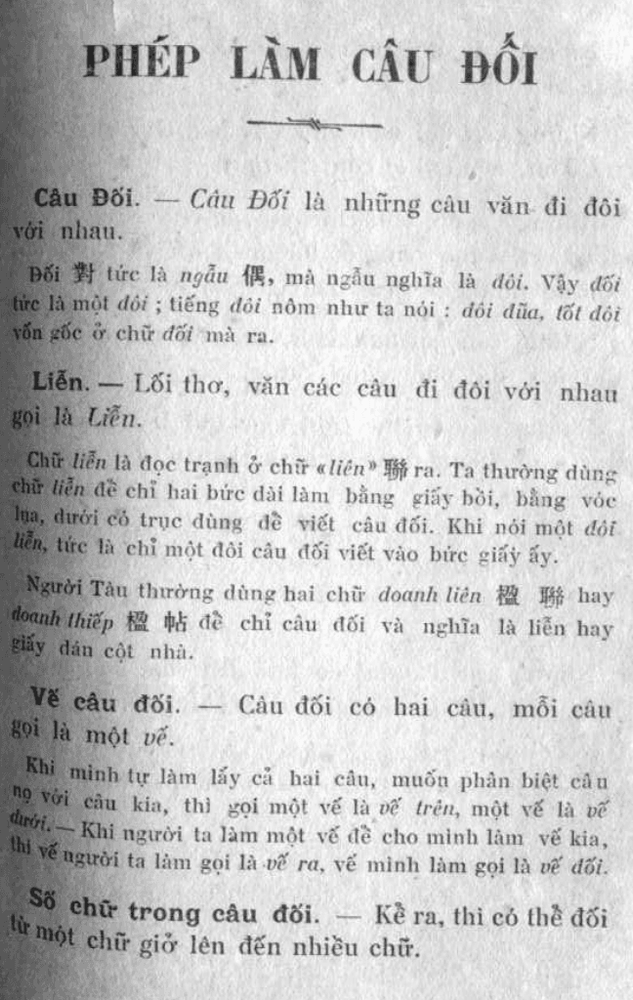
Poetic couplets (Câu đối) by Nguyễn Văn Ngọc (pen name Ôn Như) is a collection and study of one of Vietnam’s distinctive forms of folk literature — the câu đối (parallel couplet). In the preface, the author affirms that câu đối is not only a concise, rhymed form for honing intellect and language skills, but is also deeply embedded in cultural life, from the royal court to rural villages, appearing on occasions such as festivals, Lunar New Year, birthday celebrations, funerals, and home decorations.
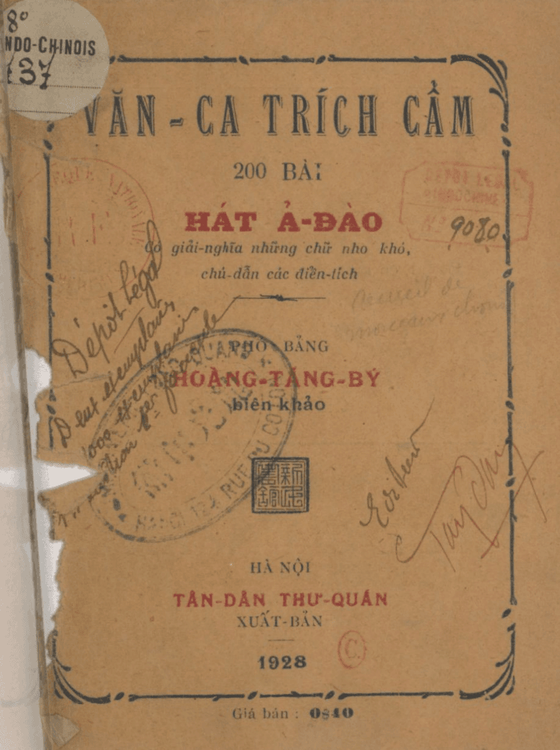
A Literary Anthology of 200 Songs of Ả đào (Văn-ca Trích cẩm: 200 Bài Hát Ả Đào) was compiled by Phó bảng Hoàng Tăng Bí. The volume preserves lyrics rich in satire, love, and philosophical reflection, while also providing explanations of Sino-Vietnamese terms and classical allusions. The book has been digitized by the Bibliothèque nationale de France (BnF).
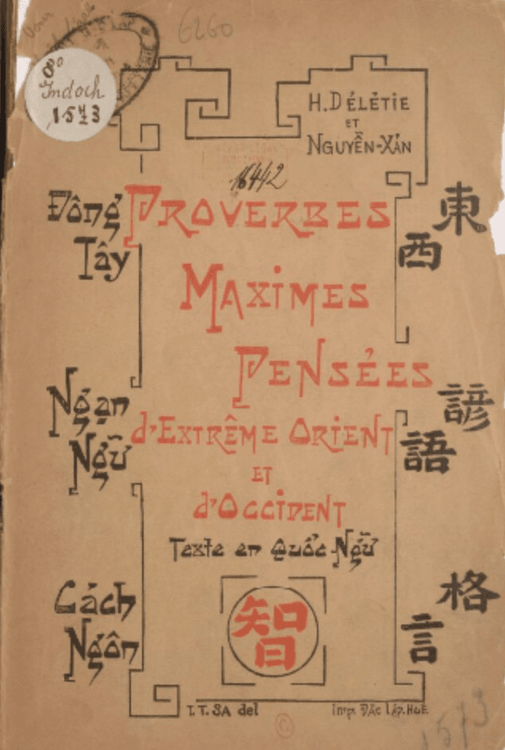
Proverbes, Maximes, Pensées d’Extrême Orient et d’Occident (Đông Tây Ngạn ngữ Cách ngôn) is a bilingual collection, presenting proverbs and maxims from both Eastern and Western traditions in quốc ngữ, with classical Sino-Vietnamese characters and French sources provided in notes. This volume aims to be both a practical moral guide for youth and families in colonial Indochina and a pedagogical resource aligned with official school curricula.
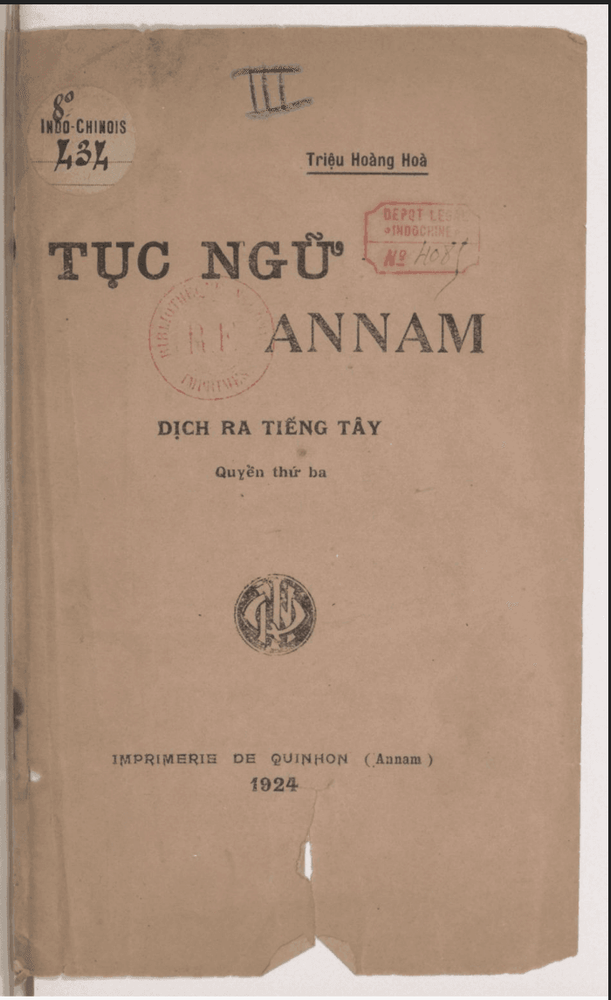
Annamese Proverbs Translated into French (Tục ngữ An Nam dịch ra tiếng Tây) was compiled by Triệu Hoàng Hòa in the context of Vietnamese–French cultural exchange during the colonial period. The work selects many distinctive proverbs rich in imagery and implication, reflecting the lived experience, folk wisdom, and moral values of the Vietnamese people. Translating them into French not only enabled French-speaking readers to access the wealth of Vietnamese folk wisdom, but also contributed to the introduction, preservation, and study of Vietnam’s intangible cultural heritage in the early 20th century. The book has been digitized by the Bibliothèque nationale de France (BnF).
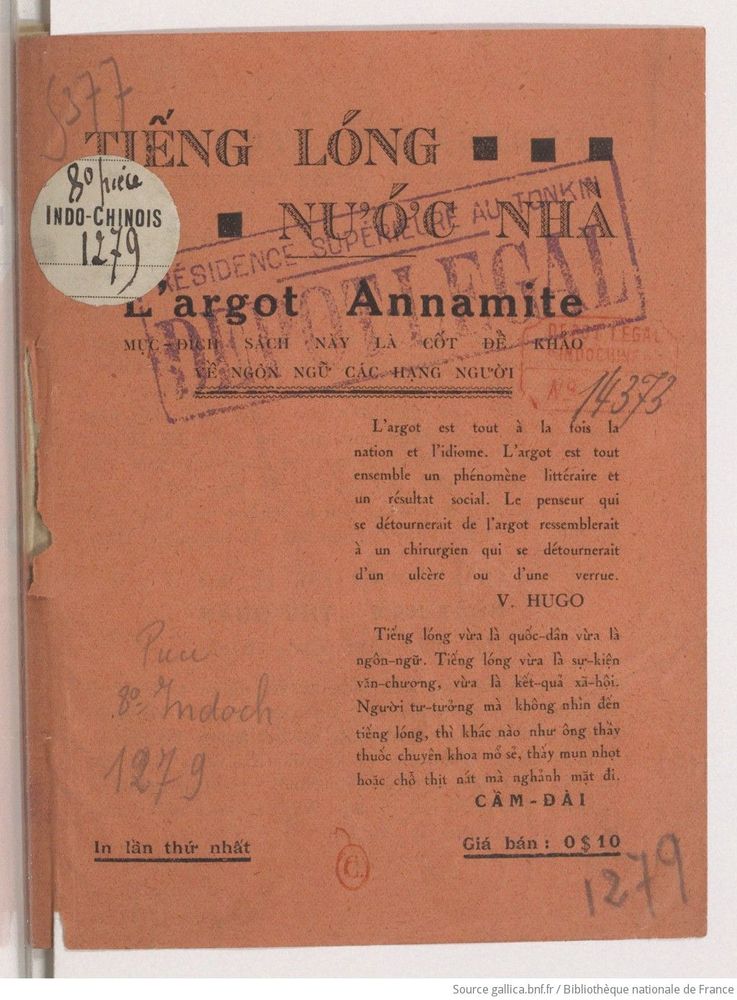
Trần Trung Viên’s Vietnamese Slangs (Tiếng lóng nước nhà) records and systematizes multiple layers of slang in everyday life, from common folk to so-called “marginal groups”. Trần Trung Viên warns readers about the presence of vulgar expressions, considering them an inevitable part of “surveying the full range of speech across classes.” This work has been digitized by BnF.
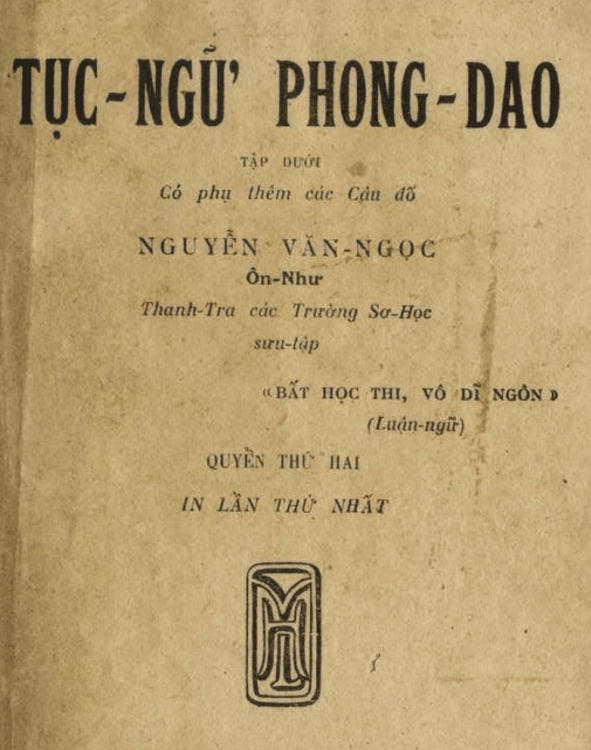
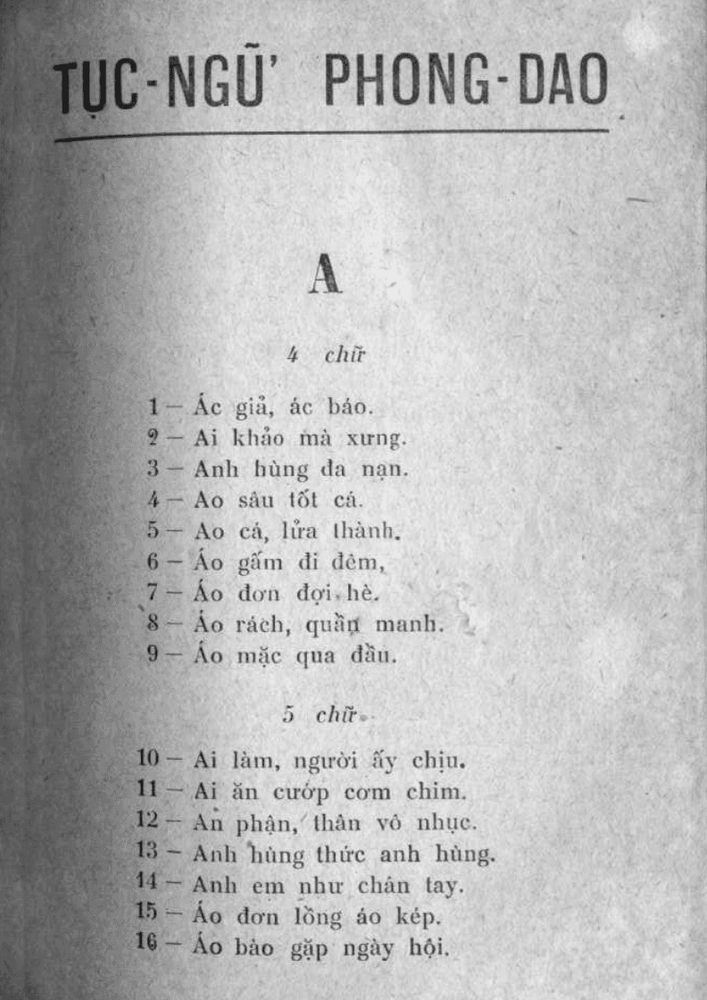
Proverbs and Folk Poetry (Tục-ngữ Phong-dao) by Nguyễn Văn Ngọc (pen name Ôn Như) is a large-scale collection and preservation project of Vietnamese folk literature, published in 1928. It compiles approximately 6,500 proverbs and over 850 folk poems recorded from oral traditions as well as from ancient books, accompanied by systematic classification and arrangement. The work is divided into two volumes: the Upper Volume contains sayings ranging from three to twenty-three words in the forms of regional expressions (phương ngôn) and proverbs (tục ngữ); the Lower Volume – Part 1 contains stanzas of four lines or more in the form of folk songs (phong dao or ca dao); and the Lower Volume – Part 2 is an appendix of riddles (câu đố). In the introduction, the author states his principle of prioritizing the collection of as many entries as possible over refined selection from the outset, without drawing overly strict distinctions between idioms, proverbs, aphorisms, prophecies, riddles, regional expressions, children’s rhymes or folk songs.
Proverbs and Folk Poetry (Tục-ngữ Phong-dao) by Nguyễn Văn Ngọc (pen name Ôn Như) is a large-scale collection and preservation project of Vietnamese folk literature, published in 1928. It compiles approximately 6,500 proverbs and over 850 folk poems recorded from oral traditions as well as from ancient books, accompanied by systematic classification and arrangement. The work is divided into two volumes: the Upper Volume contains sayings ranging from three to twenty-three words in the forms of regional expressions (phương ngôn) and proverbs (tục ngữ); the Lower Volume – Part 1 contains stanzas of four lines or more in the form of folk songs (phong dao or ca dao); and the Lower Volume – Part 2 is an appendix of riddles (câu đố). In the introduction, the author states his principle of prioritizing the collection of as many entries as possible over refined selection from the outset, without drawing overly strict distinctions between idioms, proverbs, aphorisms, prophecies, riddles, regional expressions, children’s rhymes or folk songs.