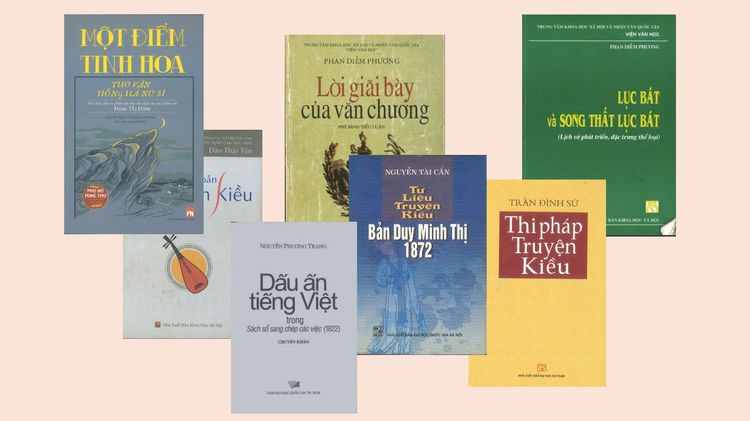
Professor Trần Đình Sử, the author of "The Poetics of Truyện Kiều", is a leading expert in literature and a pioneer in establishing the field of poetics studies in Vietnam. He has published hundreds of scholarly works, both domestically and internationally. Professor Trần Đình Sử has “loved Truyện Kiều since his youth” and began collecting materials on the work as early as the 1960s. By the 1970s, he started contemplating studying the poetics of Truyện Kiều. After many years of deep reflection, The Poetics of Truyện Kiều was first published in 2002 and has been reprinted multiple times. In the 2018 edition, the author made revisions and additions to further enhance the value of the book. The French translation of this work ("La Poétique du Kiều") was published in September 2024.

"Textual Studies of Truyện Kiều" by Associate Professor Đào Thái Tôn is a meticulously crafted, high-value scientific work that is indispensable for anyone seeking to delve deeply into Truyện Kiều. Based on original texts and employing statistical methods to analyze the linguistic variations across different versions of Truyện Kiều, the author develops a methodological approach aimed at discovering “Nguyễn Du’s original words,” recognizing that none of the existing editions of Kiều are the poet’s original manuscript. In addition to providing facsimiles of the original Nôm text, the book includes annotations in original Nôm script where the text contains engraving errors or has suffered from deterioration over time. The author also points out that the degree of textual discrepancies is significantly greater in the Huế textual system compared to the Thăng Long system, offering valuable insights for determining which versions are closer to the original. The book also features important articles by the author addressing current controversies and misconceptions, such as disproving the existence of the so-called “Phường edition” (allegedly printed by Phạm Quý Thích) and refuting the idea of a “Kinh edition” of Truyện Kiều edited by Emperor Tự Đức. With its in-depth, carefully researched content, this book provides comprehensive information that helps readers gain a thorough understanding of Nguyễn Du’s Truyện Kiều. It is hoped that this work will serve as a valuable reference for scholars, cultural researchers, and anyone interested in Vietnamese literature.

The book is a meticulous and well-documented work, consisting of four parts: Truyền kỳ tân phả (A New Compilation of Marvelous Tales), Chinh phụ ngâm khúc diễn âm (The Lament of a Soldier’s Wife in Vernacular Verse), Hồng Hà phu nhân di văn (The Writings of Lady Hồng Hà), and an appendix featuring the most recent and significant studies on Đoàn Thị Điểm and her works by various scholars and researchers. Associate Professor Dr. Trần Thị Băng Thanh carefully compiled, researched, translated, transcribed, and annotated the texts with scholarly rigor and precision. She also respectfully incorporated and obtained permission to include the completed translations of esteemed predecessors such as Ngô Lập Chi, Trần Văn Giáp, Bùi Hạnh Cẩn, Hoàng Xuân Hãn, and Nguyễn Kim Hưng. “A Glimpse of Elegance – The Poetry and Prose of Poetess Hồng Hà” is a valuable and insightful contribution to both researchers and literature enthusiasts. The book not only paints a portrait of Lady Hồng Hà through her literary works, which hold immense historical and contemporary relevance, but also reflects the enduring admiration and appreciation of generations of readers over nearly three centuries since her passing.
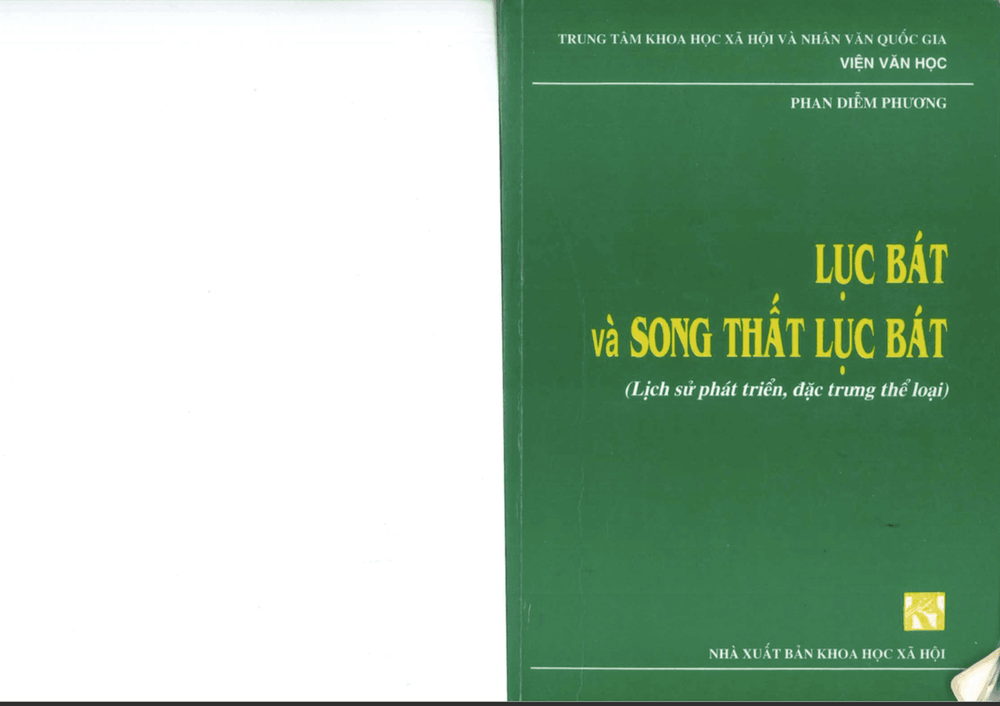
Perhaps for every Vietnamese, it is impossible not to know a few lines of lục bát folk poetry or verses from “The Tale of Kiều”. Alongside “The Tale of Kiều” and "The Lament of the Soldier’s Wife”, Vietnamese classical and modern literature boasts many outstanding works composed in two poetic forms rich with national identity: lục bát and song thất lục bát. For a long time, Vietnamese literary scholars, both at home and abroad, have not only delved deeply into specific works but have also shown great interest in exploring these two poetic forms, which have contributed significantly to the success of these immortal masterpieces. However, until now, there has been no dedicated, comprehensive study on either of these poetic forms. In this context, the book "Lục Bát and Song Thất Lục Bát: History of Development and Genre Characteristics" by Dr. Phan Diễm Phương fills this significant gap. Through a meticulous survey, analysis, and comparison of a wide range of representative lục bát and song thất lục bát works that have graced Vietnamese literature over five centuries—from the classical to the modern era—the author provides a comprehensive overview of their developmental journey and genre characteristics. This work highlights the close relationship between the nation’s poetic rules and the thematic depth of these distinctive poetic forms.

“The Voice of Literature” is a collection of critical essays by Phan Diễm Phương, selected from the author’s previously published works in specialized literary journals and books. The book is divided into two parts. Part I, “Impressions,” consists of commentaries on the works of renowned authors or emerging writers who are striving to establish their place in contemporary Vietnamese literature, including Nguyễn Mỹ, Tô Hà, Hữu Thỉnh, Vũ Quần Phương, Thạch Quỳ, Nguyễn Mạnh Tuấn, Hà Khánh Linh, Nguyễn Quang Lập, and Trần Thuỳ Mai. Part II, “Reflections,” delves into aspects of the style and poetics of prominent, now-deceased authors such as Nam Cao, Nguyên Hồng, and Thạch Lam. It also explores the origins, poetics, and historical trajectory of two of the most celebrated poetic forms in Vietnamese literature: lục bát and song thất lục bát.
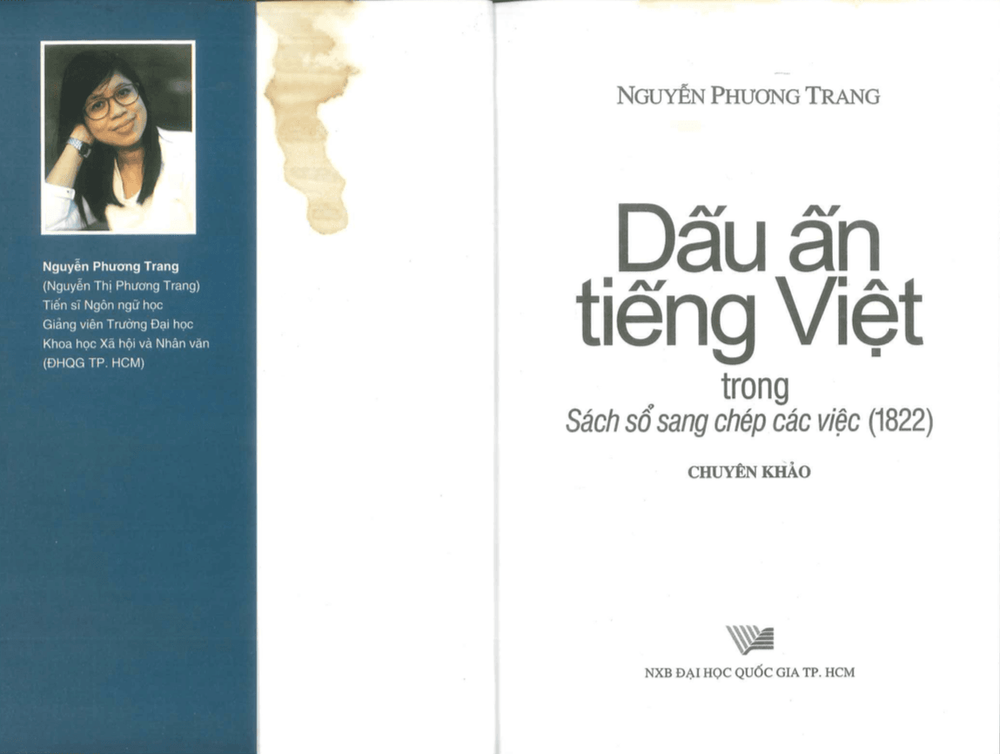
Unlike the "Vietnamese-Portuguese-Latin Dictionary" by Alexandre de Rhodes (1651), "Sách sổ sáng chép các việc" by Philiphê Bỉnh (1822) is a work that is not well-known or perhaps unfamiliar to the general reader. One reason for this is its small scale and personal nature – it is a memoir by an unknown author. Additionally, the limitations of printing, publishing, and distributing a handwritten work within the country also contribute to its obscurity. However, for those interested in the Vietnamese language in general and researchers studying the history of the Vietnamese language in particular, this is a valuable resource about the Vietnamese language at the end of the 18th century and the beginning of the 19th century. Before writing this monograph, Associate Professor Dr. Nguyễn Phương Trang had transcribed the original handwritten manuscript of "Sách sổ sáng chép các việc" into a printed form using the current national language script in 2012. With this national language version of "Sách sổ sáng chép các việc," the author aims to describe and analyze only a few notable phenomena and "traces" in phonology, writing, vocabulary, and grammar from that time rather than providing a complete account of all its expressions. Therefore, through this monograph, the author hopes to provide a research result on the state of the Vietnamese language (phonology, writing, vocabulary, and grammar) at the end of the 18th century and the beginning of the 19th century (as seen in the national language version of "Sách sổ sáng chép các việc - 1822") for lecturers, students, and researchers in linguistics, literature, cultural studies, history, and ethnology. At the same time, it also offers a useful reference for teaching and learning the Vietnamese language and script in schools.
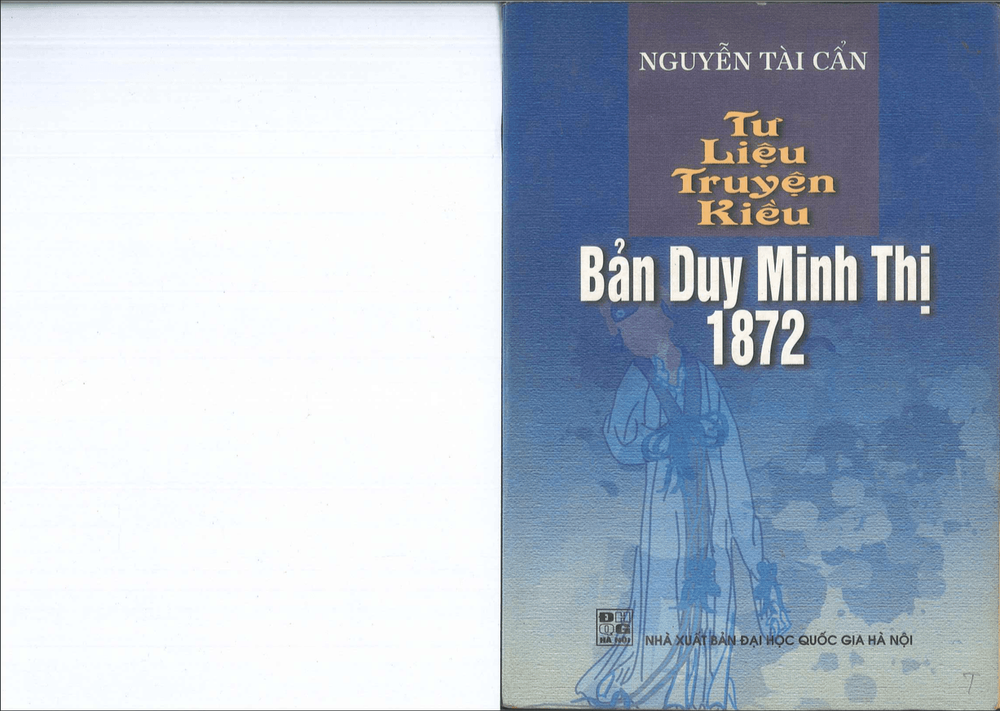
“Truyện Kiều Materials – The Duy Minh Thị Edition of 1872” by Prof. Nguyễn Tài Cẩn is a meticulously researched work of immense value to those interested in Truyện Kiều and textual studies. The book focuses on examining the Kiều edition engraved and printed by the Duy Minh Thị publishing house in 1872 — one of the few surviving ancient editions available today. The author not only compares the Duy Minh Thị edition with numerous other Kiều versions but also delves deeply into the phonetics, vocabulary, and linguistic style of Nguyễn Du to uncover the textual traces most faithful to the original. Through rigorous scientific analysis and well-grounded arguments, Prof. Nguyễn Tài Cẩn provides insightful observations on the differences between various Kiều editions over time, shedding light on the process of dissemination and transformation of this masterpiece. The book is not only an invaluable resource for scholars in literature and linguistics but also opens up new avenues for exploring Truyện Kiều and Vietnam’s rich cultural heritage.

This voluminous book of more than a thousand pages introduces the portraits of 90 distinguished figures. For Professor Phong Lê, it is first of all a retrospective—a journey back to the subjects of study to which he has devoted nearly sixty years of reading, learning, and research. From the names that marked significant turning points in medieval Vietnamese literature—such as Chu Văn An, Lê Thánh Tông, Nguyễn Bỉnh Khiêm—to the illustrious figures like Nguyễn Du, Nguyễn Công Trứ, and Cao Bá Quát, the author gradually guides readers through the continuous flow of Vietnam’s literary tradition. Most of the remaining portraits feature the major figures who shaped the face of twentieth-century Vietnamese literature, a period when the nation was undergoing a profound transformation toward modernity. Through these portraits, the book not only sketches a comprehensive picture of the nation’s cultural journey but also opens up for readers a vast horizon—where the longing for freedom, the spirit of creativity, and the pursuit of truth and beauty come vividly to life.
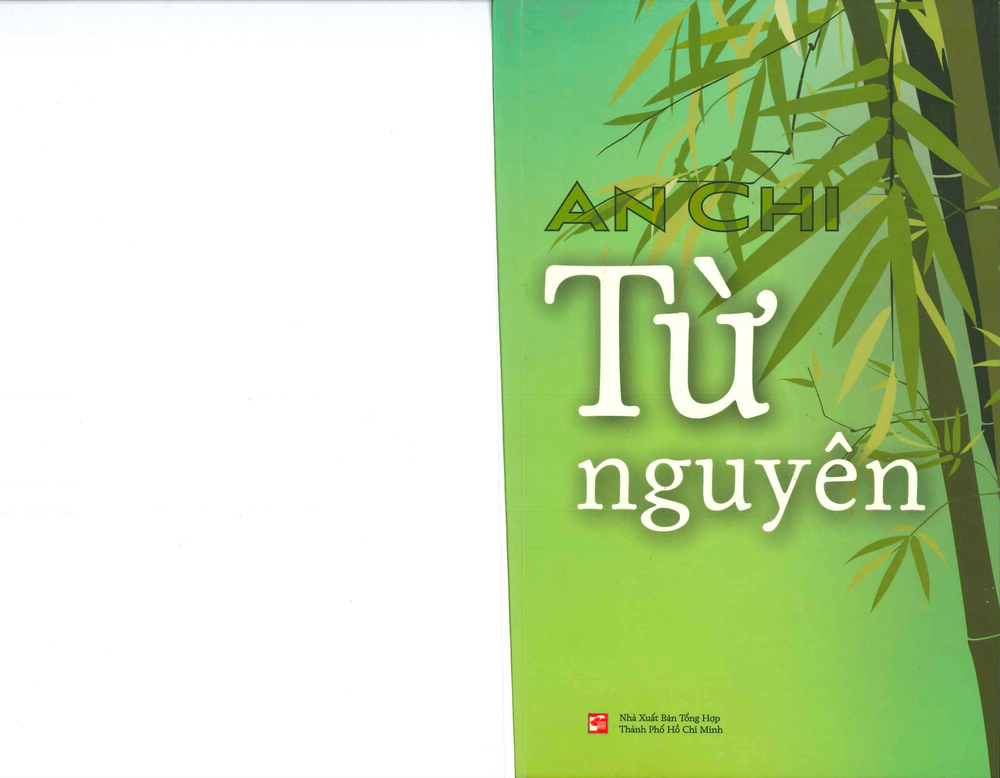
The term “etymology” originates from the Greek word etimologia, meaning “true speech” or “the true meaning of a word.” In its common understanding, etymology, a branch of historical linguistics, studies the history of words and their origins — the original forms and meanings that have become obscured in contemporary language. Therefore, the study of etymology is a serious scholarly pursuit, not one that can be carried out spontaneously or based solely on subjective speculation. It requires researchers to apply rigorous scientific methods built upon well-defined principles. It can be said that few people devote themselves to etymological research; even among those who do, their work often remains intermittent or fragmented. Scholar An Chi is a rare exception — he has devoted a long period of his life to tracing the origins of words, a pursuit he fondly calls “wandering in the land of words.” Yet, behind that seemingly playful phrase lies a spirit of methodical and disciplined inquiry, never indulging in arbitrary or purely subjective reasoning.

Since its emergence in the early 19th century, "The Tale of Kiều" has been reproduced, transcribed, annotated, and studied in countless editions, becoming an inexhaustible source of inspiration for the Vietnamese people. Scholar An Chi added his distinctive voice with The Tale of Kiều – Duy Minh Thị Edition (1872). The book stands out in three key aspects: (1) It's an accurate and well-reasoned transcription, based on the features of southern Chữ Nôm and corrections of printing errors; (2) its carefully written and emotionally engaging annotations and discussions, arranged methodically and offering fresh interpretations of The Tale of Kiều's language; and (3) the author’s rigorous scholarly spirit and openness to dialogue, shown through extensive cross-referencing and attentive engagement with readers’ feedback. Enriched with vivid illustrations, this work adds a unique hue to the vibrant “garden of Kiều studies.”
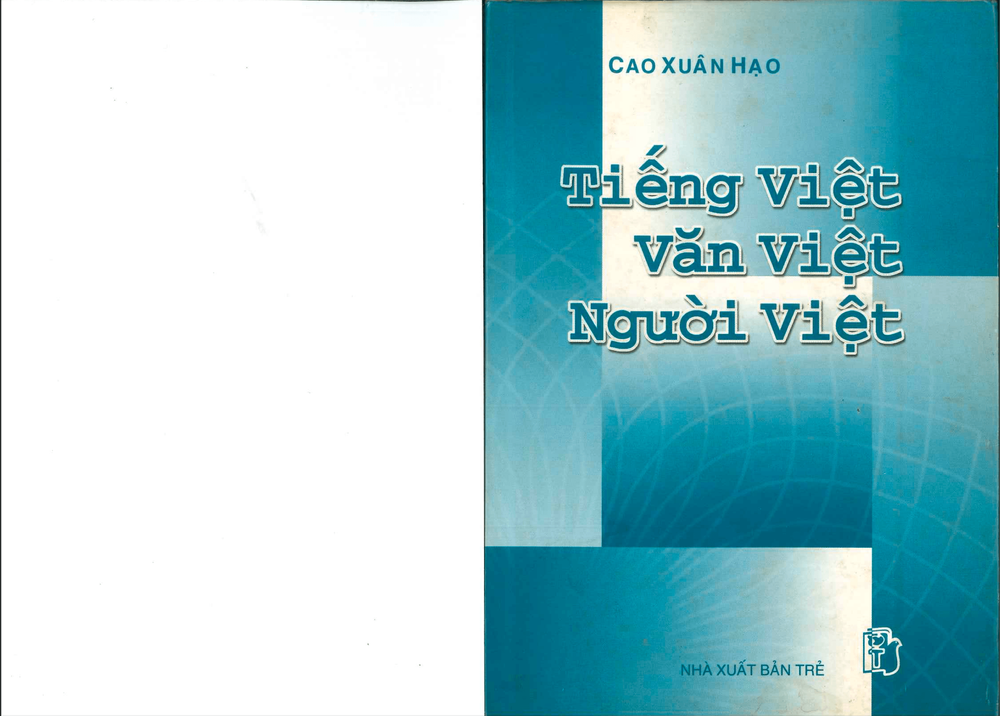
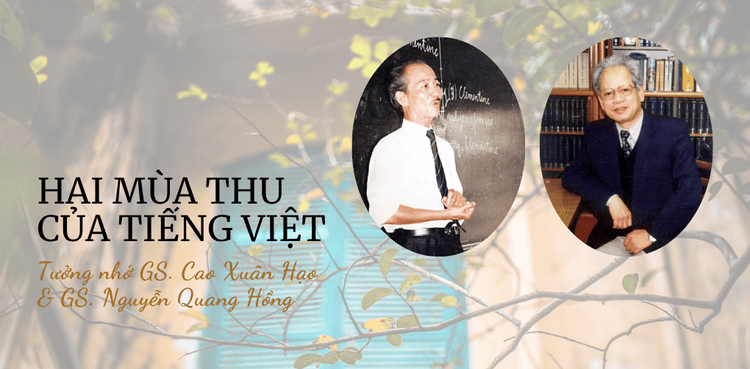
The collection "Vietnamese Language - Vietnamese Literature - Vietnamese People" gathers essays by Professor Cao Xuân Hạo published between 1982 and 2001, divided into three sections: Vietnamese Language, Vietnamese Literature, and Vietnamese People and Culture. The book reflects his views on the Vietnamese language, literature, and culture. While his main focus is on the language, he also extends his discussion to related areas such as literature and cultural life. His writings are sharp and rarely neutral, often provoking strong reactions from readers, some in agreement, others in opposition, but few indifferent. Because he refused to follow popular opinion, many of his arguments may sound provocative, though they are never coarse. Most of the essays in this collection are non-technical and do not require specialized linguistic knowledge. Readers who wish to explore the scholarly foundations of his thought may consult his other works, such as "Vietnamese – A Functional Grammar Outline", "Vietnamese – Issues in Phonology, Grammar, and Semantics", "Phonology and Linearity", or journals like "Tạp chí Ngôn ngữ" (Journal of Linguistics) and "Ngôn ngữ & Đời sống" (Language & Life).
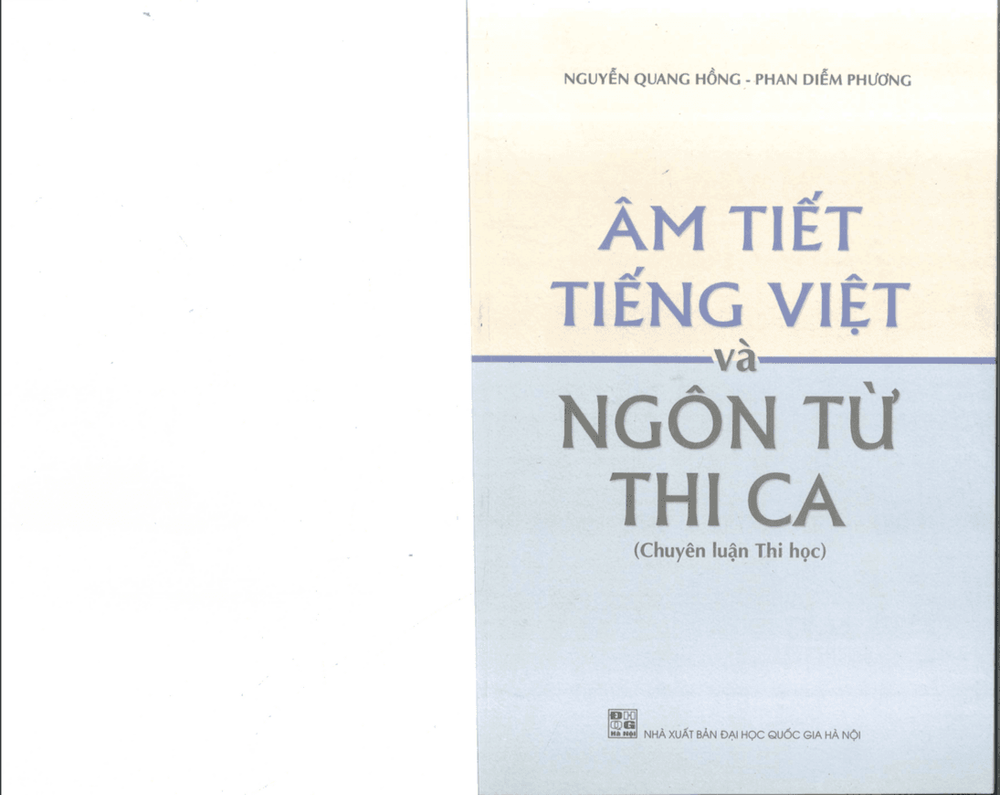
Vietnamese poetry has a long-standing tradition, and discussions about poetry have existed since ancient times. Many books on Vietnamese poetry have been published since the early 20th century. However, when it comes to the theory of poetics at the phonetic level, this can be considered the first work of its kind, as previous works mostly described poetic rules based on traditional experience. This is a monograph that the authors have long cherished and practiced in teaching for 40 years, and now have the opportunity to present in the form of a book. Following this approach, the book is divided into three parts: (1) Vietnamese Poetic Language: Necessary Perspectives (the first three chapters), which presents the basic theories of the book; (2) Vietnamese Poetic Language: Basic Forms (seven chapters), which explores the poetic rules of Vietnamese poetry through detailed descriptions of its main poetic forms; and (3) Vietnamese Poetic Language: Aesthetic Aspects (the last three chapters), which focuses on "poetic aesthetics" and offers a theoretical and specific analysis of the aesthetic aspects of Vietnamese poetic tones.
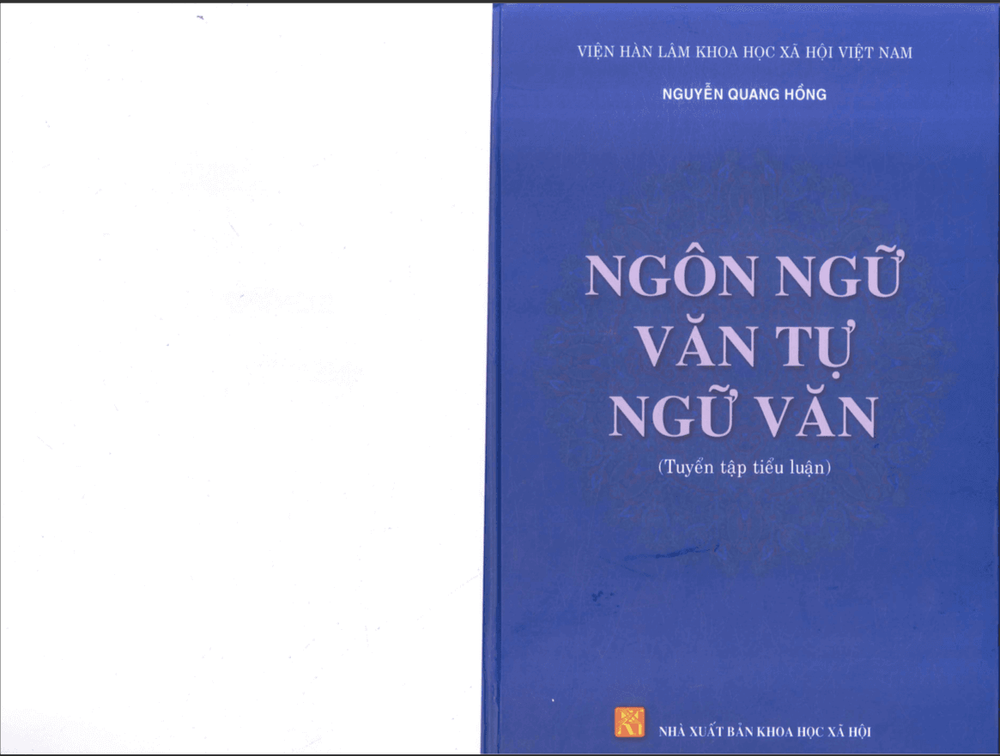
This book is a collection of important articles by Professor Nguyễn Quang Hồng on linguistics, grammatology, and philology over the past 40 years, carefully selected and refined. The monograph is divided into two major sections: (1) Linguistics and Vietnamese Language Studies and (2) Philology and Hán-Nôm Studies The monograph addresses many significant issues in linguistics, such as distinguishing language types, standardizing Vietnamese pronunciation, analyzing syllable structure, and studying the Nôm script, among others. Not only does this work summarize and cover the key research areas of Professor Nguyễn Quang Hồng, but it also serves as a foundation for future interdisciplinary studies, encouraging the exploration of new questions and further development in the field.
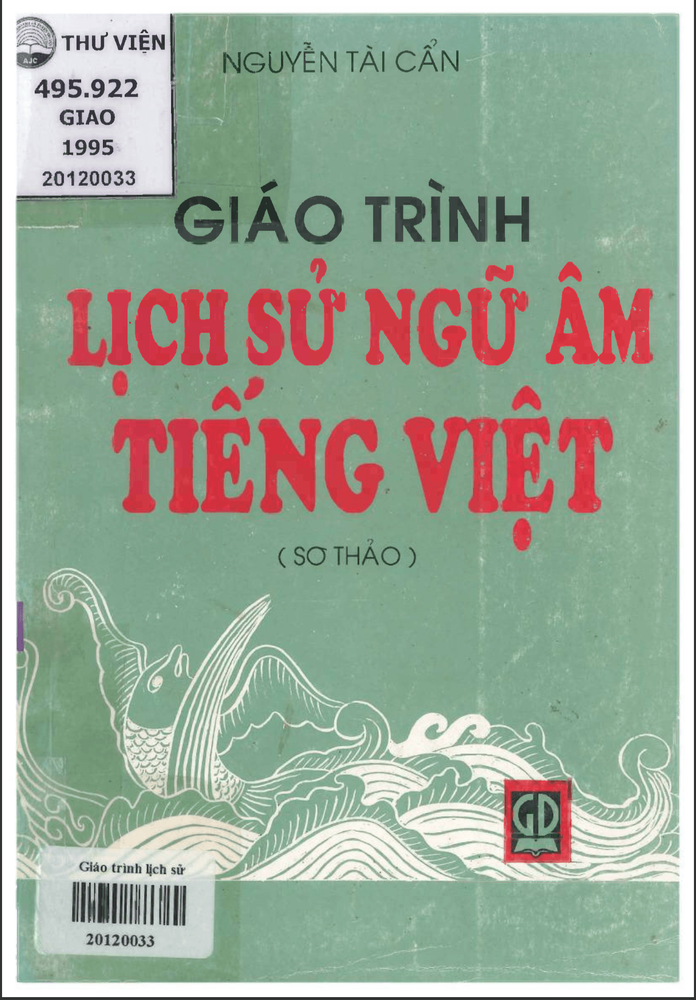
“A History of Vietnamese Phonology” by Professor Nguyễn Tài Cẩn is a foundational scholarly work, regarded as a landmark in the study of Vietnamese linguistic history. The book establishes a rigorous theoretical framework and reconstructs the developmental course of Vietnamese phonology from the Sino-Vietnamese period through the Middle Vietnamese stage to the Early Modern period, thereby laying the groundwork for the discipline of Vietnamese historical linguistics.
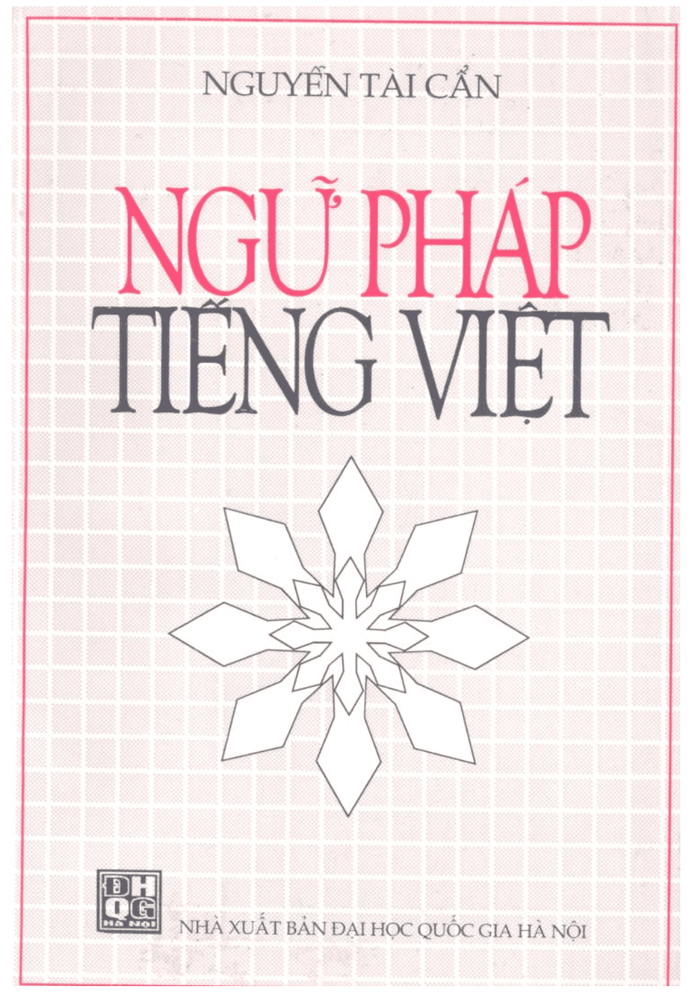
This is a very fundamental textbook on Vietnamese linguistic theory, compiled by Professor Nguyễn Tài Cẩn, a highly respected scholar in the field of Vietnamese linguistics. The book offers rich academic content, incorporates modern linguistic theory, and is grounded in the practical realities of the Vietnamese language. The author systematically presents a series of key issues in Vietnamese grammar with exemplary pedagogical clarity, enabling readers to easily grasp the material—whether they are majors in linguistics, foreign-language-majored students specializing in interpretation and translation, or teachers of Vietnamese language and literature in general. This textbook is intended for students of linguistics, graduate students, doctoral candidates, secondary-school teachers, and students of Colleges of Education and pedagogical universities specializing in Vietnamese literature.
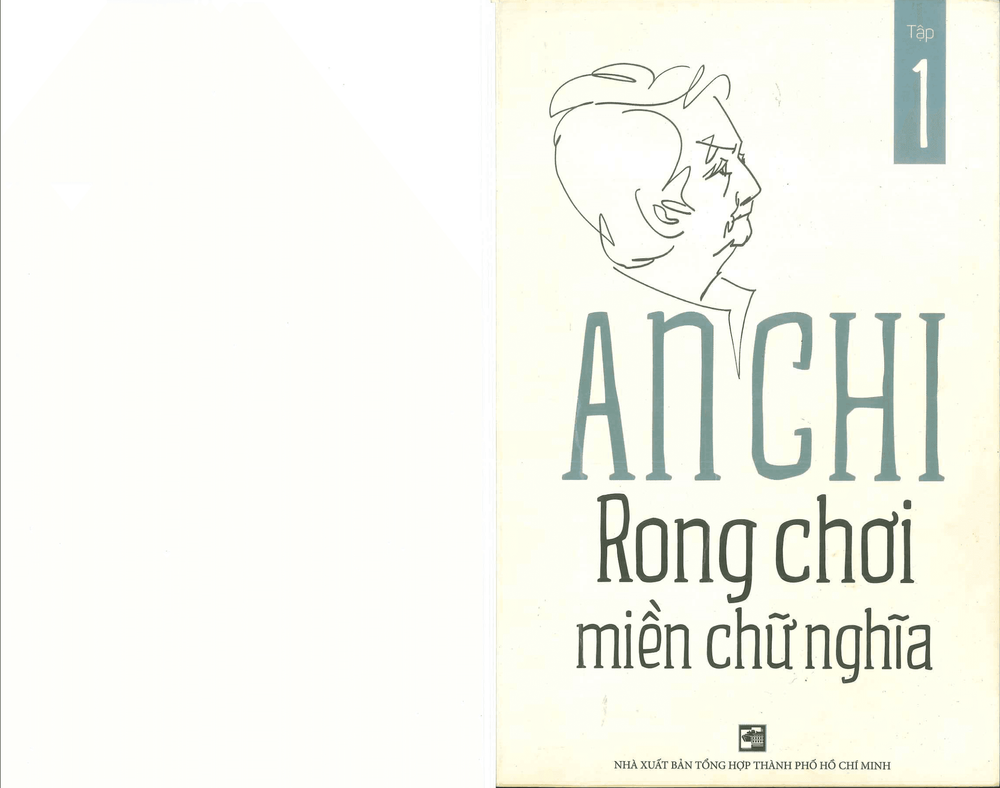
"Rong chơi miền chữ nghĩa" (Volume 1) ("Wander through the Realm of Words", Volume 1) is a three-volume book series by the scholar An Chi, bringing together a curated selection of his essays originally published as responses and linguistic explanations in newspapers such as Người Đô Thị, Đương Thời, and Năng Lượng Mới. The series aims to decode the origins, meanings, and interpretations of words, idioms, and place names in Vietnamese through a style of analysis that is lively, scholarly, yet accessible. Volume 1 opens this “wander through the realm of words” with engaging linguistic questions, ranging from simple to complex examples in Vietnamese. An Chi explains vocabulary, idioms, and everyday expressions, analyzing their origins and semantic shifts over time and across cultural practices. Under his pen, seemingly familiar questions—such as “Is Mão the Year of the Cat or the Rabbit?”—along with proverbs and idiomatic expressions, are reexamined from an etymological and linguistic perspective, allowing readers to learn while taking genuine pleasure in the exploration.
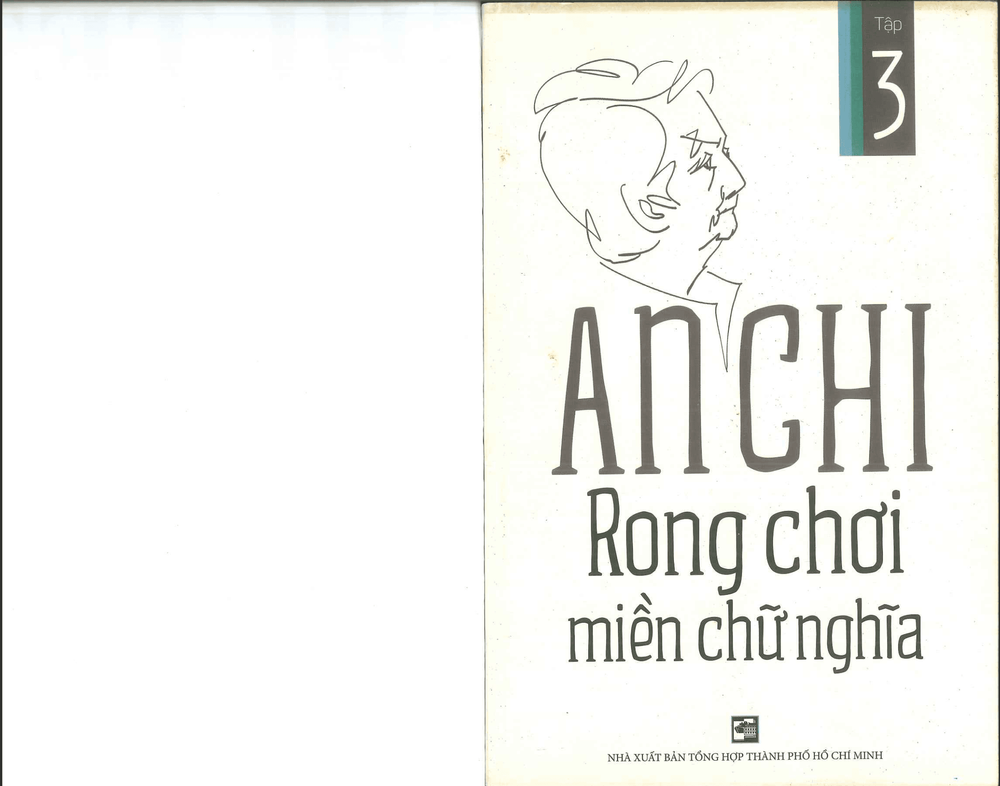
In this volume, the author further expands the “journey through the realm of words” toward more in-depth reflections on expression and word usage in both writing and everyday communication. An Chi elucidates the linguistic nuances embedded in sentences and highlights words that are easily misunderstood in both traditional culture and contemporary life, enabling readers to recognize the precise meanings, deeper origins, and intriguing histories of each term. All three volumes share a distinctive style—profound yet approachable. The author not only analyzes meanings and etymologies but also provides concrete examples, compares lexical origins, and situates language within its historical and cultural contexts. The series helps readers gain a deeper understanding of Vietnamese, fostering greater appreciation for and preservation of the language’s clarity and integrity.
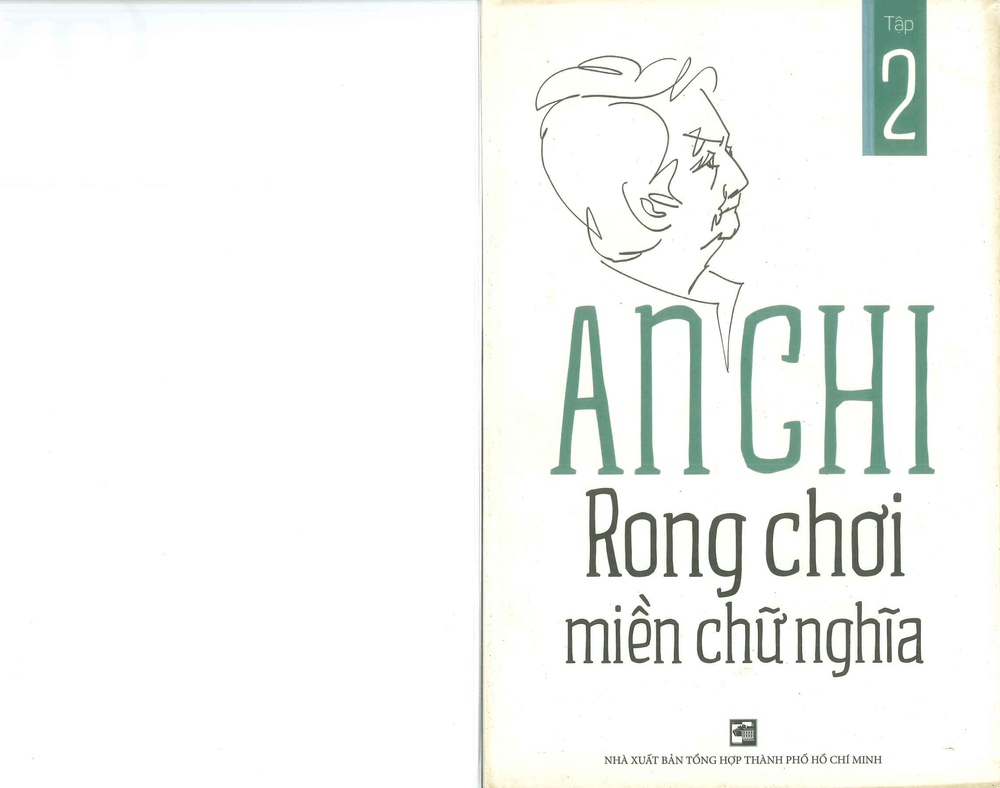
Following Volume 1, "Rong chơi miền chữ nghĩa" (Volume 2) delves more deeply into the original meanings and variant senses of Vietnamese words, especially those that are commonly misunderstood. The author explains how a word, once absorbed into everyday usage, can shift in meaning due to habitual use, regional variation, or broader cultural and historical influences. By comparing these usages with principles of etymology and Sino-Vietnamese vocabulary, he clarifies numerous linguistic misconceptions.
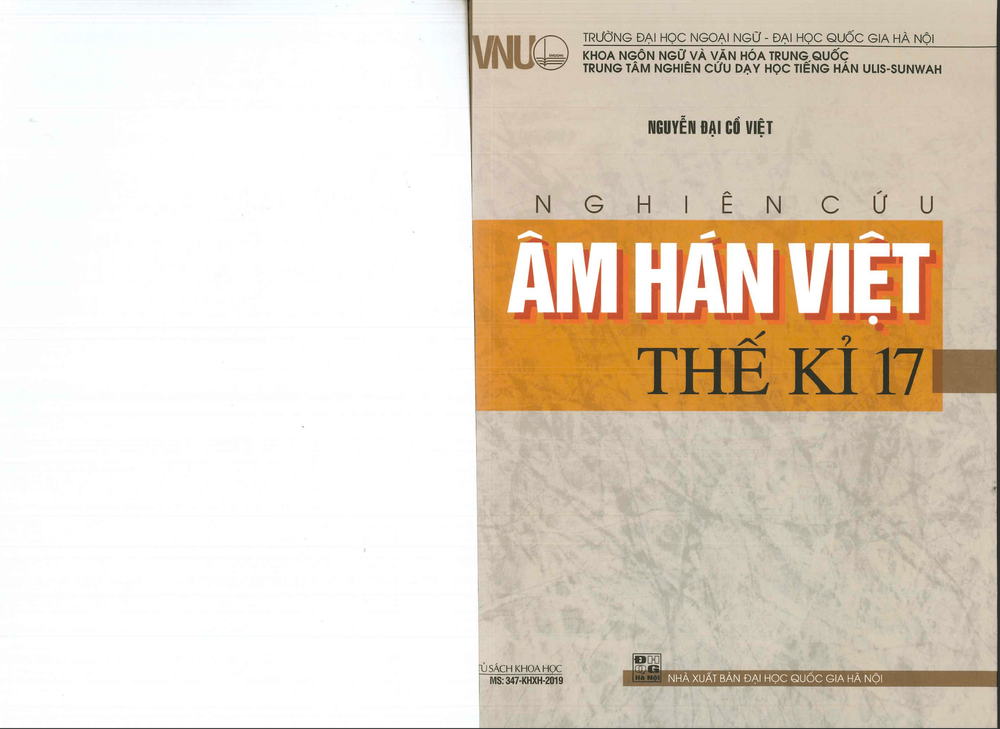
“A Study of 17th-Century Hán-Việt Readings” is a monograph developed from Dr. Nguyễn Đại Cồ Việt’s doctoral dissertation (2011) at Peking University. Although the main text is written in Chinese, the book includes a Vietnamese introduction that systematizes its methodology and specialized terminology. The study introduces the concept of “Vietnamese readings of Chinese characters” as a framework encompassing layers of Sino–Vietnamese contact across history, and is distinguished by its theory of “internal contact,” which explains the interaction between Sino-Vietnamese and native Vietnamese phonological strata. Drawing on early Quốc ngữ sources, especially the "Annamese–Portuguese–Latin Dictionary"(1651) and "History of Annam"(1659) by the Vietnamese priest Bento Thiện, the author reconstructs the phonological system of the 17th century, identifying new patterns of correspondence as well as previously unexplained irregularities. The work emphasizes the agency of Vietnamese in the process of “Vietnamizing” external elements, while clarifying the distinction between standardized Hán-Việt readings and localized Hán-Nôm forms. It represents a significant contribution to historical phonology and to the study of Hán-Nôm materials.

Published in March 2023 as part of Event Cancellation in the Languages of Mainland Southeast Asia (東南アジア大陸部諸言語の事象キャンセル), this Japanese-language article by Shimizu Masaaki (清水政明) is titled “Event Cancellation in Vietnamese” (ベトナム語の事象キャンセル). The study examines how Vietnamese expresses situations in which an event or its expected result is cancelled or fails to materialize, despite an action having been initiated or attempted. Using a large set of Vietnamese example sentences, the author investigates the grammatical and semantic conditions under which speakers can describe an action in the first clause while subsequently denying its expected outcome. The article approaches event cancellation through a systematic series of semantic tests. These examine whether Vietnamese allows cancellation of such components as physical change in an object, perception or cognition of an object, movement, contact with an object, arrival at a destination, creation of an object, acquisition or possession, sound production, ingestion, the final state of an agent’s action, the initiation of an agentive action, and actions or emotions caused in another person. Examples include verbs corresponding to “cut,” “break,” “open,” “burn,” “move,” “build,” “buy,” “eat,” “drink,” “stand,” “sit,” and “run,” as well as various causative constructions. A central issue is the interaction between lexical aspect, grammatical constructions, and the interpretation of results. The analysis shows that Vietnamese verbs differ considerably in whether an expected result can subsequently be denied. In some cases, a sentence equivalent to “I did X, but the expected result did not occur” is acceptable; in others, the use of the verb itself entails that the result has already been achieved, making cancellation semantically contradictory. The article also tests how markers such as đã (anterior/perfective), rồi (completion), and constructions involving định (intention) affect these interpretations. The study pays particular attention to causative-resultative expressions. Vietnamese employs several causative constructions, including bắt, cho, and làm, but the possibility of cancelling the resulting event differs among them. The author finds that constructions with bắt and cho can permit cancellation of the expected result in a number of contexts, whereas constructions with làm tend to entail that the result has actually occurred. This distinction provides evidence that superficially similar causative constructions encode different relationships between the causing event and its result. The article concludes by organizing its findings across fourteen semantic categories, summarized in detailed tables at the end of the study. These tables compare whether cancellation is possible with the basic verb phrase, with đã + VP, and with VP + rồi, revealing substantial differences among Vietnamese predicates and event types. More broadly, the study demonstrates that event cancellation provides a useful diagnostic for understanding Vietnamese event structure, aspect, result entailment, and causative constructions. It is therefore particularly relevant to research on Vietnamese semantics, syntax–semantics interaction, lexical aspect, event structure, and causativity.

Published in 2000 by Walter de Gruyter (Berlin and New York) in Volume 1 of History of the Language Sciences / Geschichte der Sprachwissenschaften / Histoire des sciences du langage: An International Handbook on the Evolution of the Study of Language from the Beginnings to the Present, this French-language chapter by Nonna V. Stankevic is titled “La tradition linguistique vietnamienne et ses contacts avec la tradition chinoise” (“The Vietnamese Linguistic Tradition and Its Contacts with the Chinese Tradition”). The volume was edited by Sylvain Auroux, E. F. K. Koerner, Hans-Josef Niederehe, and Kees Versteegh. The chapter provides a historical overview of the development of Vietnamese linguistic thought and scholarship, with particular attention to its long-standing interaction with the Chinese linguistic tradition. The author organizes this history around several major stages, beginning with the period preceding intensive Chinese influence, followed by the centuries of Chinese linguistic and cultural influence, and finally the period of French influence. The chapter emphasizes that Vietnamese scholars did not simply adopt Chinese linguistic practices but adapted them to the distinctive phonological, grammatical, and lexical characteristics of Vietnamese. A major part of the chapter examines the Chinese period and Sino-Vietnamese linguistic contact. The author discusses successive layers of Chinese vocabulary in Vietnamese and different traditions of reading Chinese characters, including ancient Sino-Vietnamese, standard Sino-Vietnamese, and Vietnamese adaptations of Sino-Vietnamese readings. The comparative table on the chapter's opening page illustrates these layers through words such as those for “season,” “room,” “near,” and “plank.” The discussion also considers how contact with Chinese influenced Vietnamese phonology, including historical changes involving consonants and tones. The chapter then turns to the development of Vietnamese lexicography and linguistic scholarship. It surveys dictionaries and other reference works produced by Vietnamese scholars, including bilingual Chinese–Vietnamese dictionaries and works devoted to chữ Nôm. The author argues that traditional Vietnamese linguistic knowledge was strongly practical in orientation but nevertheless incorporated sophisticated observations concerning syllable structure, tones, rhyme, lexical categories, writing, dialectal pronunciation, and semantic relationships. This material demonstrates the existence of a substantial indigenous tradition of reflection on the Vietnamese language, even though it was not always formulated as an explicit theoretical system. Particular attention is devoted to chữ Nôm, which the author describes as a writing system developed by Vietnamese speakers on the basis of Chinese characters and their graphic and phonetic principles. The chapter analyzes several mechanisms used to create and employ Nôm characters, including the borrowing of Chinese characters according to their sound or meaning and the creation of new characters combining semantic and phonetic components. The diagram in the chapter classifies different types of Nôm characters and illustrates how the script reflects both Chinese writing principles and specifically Vietnamese linguistic developments. The final section discusses the modern period and the emergence of Quốc Ngữ. The author traces the development of the Romanized Vietnamese writing system to the work of Western missionaries in the seventeenth century and highlights Alexandre de Rhodes's 1651 dictionary as an important milestone. The chapter then describes the gradual expansion of Quốc Ngữ under French colonial rule, the decline of traditional instruction in Chinese characters, and the emergence of modern Vietnamese dictionaries and linguistic scholarship. It also notes the later incorporation of concepts from European linguistics into Vietnamese grammatical analysis. More broadly, the chapter presents the history of Vietnamese linguistic scholarship as the product of long-term interaction between indigenous Vietnamese practices, the Chinese scholarly tradition, and later European linguistic traditions. Rather than treating Vietnamese linguistic thought as merely derivative, it highlights processes of adaptation through which imported concepts and writing practices were reshaped to address the particular characteristics of Vietnamese. The chapter is therefore especially valuable for research on the history of Vietnamese linguistics, Sino-Vietnamese linguistic contact, Vietnamese lexicography, chữ Nôm, Quốc Ngữ, historical phonology, and the intellectual history of language study in Vietnam.